
A villa intercom system earns its keep well beyond the gate. For a detached home, the specification that separates a comfortable install from a genuinely secure one is the monitoring layer: how many wired defense zones the indoor unit carries, what the screen shows at a glance, and how the outdoor devices get powered. These choices are made before hardware is ordered, and they are expensive to revisit. This piece goes through that layer from a buyer’s point of view.
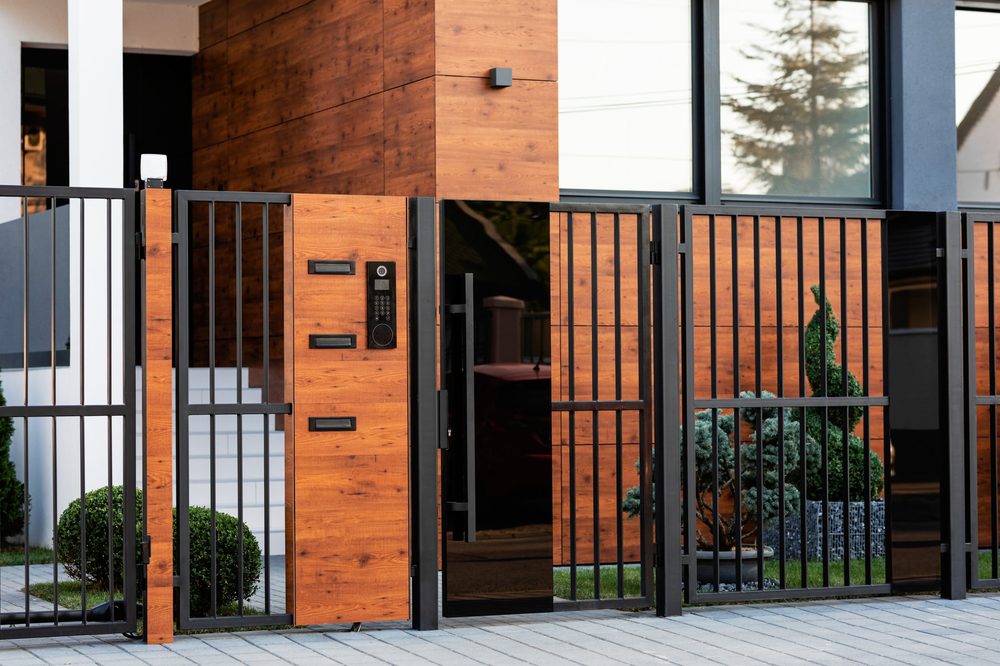
The Monitoring Layer a Villa Intercom System Must Cover
Most villa intercom purchases start at the door and stop there. The 8-zone design changes that. The indoor unit’s alarm access function monitors 8 wired defense zones, and a separate fire/security alarm input lets smoke or intrusion devices report into the intercom instead of a standalone alarm system. One screen, two jobs.
Each wired defense zone is one physical circuit bound to a sensor or alarm device: a door contact on the gate, a motion line around the garden, a smoke detector upstairs. The indoor unit reports which zone fired, not just that something happened. For the owner, that is the difference between an alert and a diagnosis; for the installer, it is a fixed wiring plan instead of guesswork. Zone boundaries should follow how the building is actually used; a zone that spans two floors makes the diagnosis half as useful.
The practical question is which zones to wire first. Entry points are the obvious start: gate, front door, service entrance, and a perimeter motion line cover the outside of most villas. The remaining zones are better spent where intrusion is usually noticed late: back-of-house doors, a stairwell, or the garage.
The 7-inch SIP indoor monitor is the unit this design centers on, with the wired defense zone inputs and the four-segment display built into the same panel the family uses for day-to-day calling.
The Indoor Monitor as the Monitoring Hub
The indoor monitor is where the 8-zone design becomes visible. A 7-inch screen is the working size in this class, and the four-segment function lets four different areas be watched at the same time: front gate, side door, driveway camera, and an alarm status view, for example. Four areas, one screen. The four-segment view is also why the monitor is specified at 7 inches rather than smaller; four feeds on a 5-inch panel stop being readable from across a room.
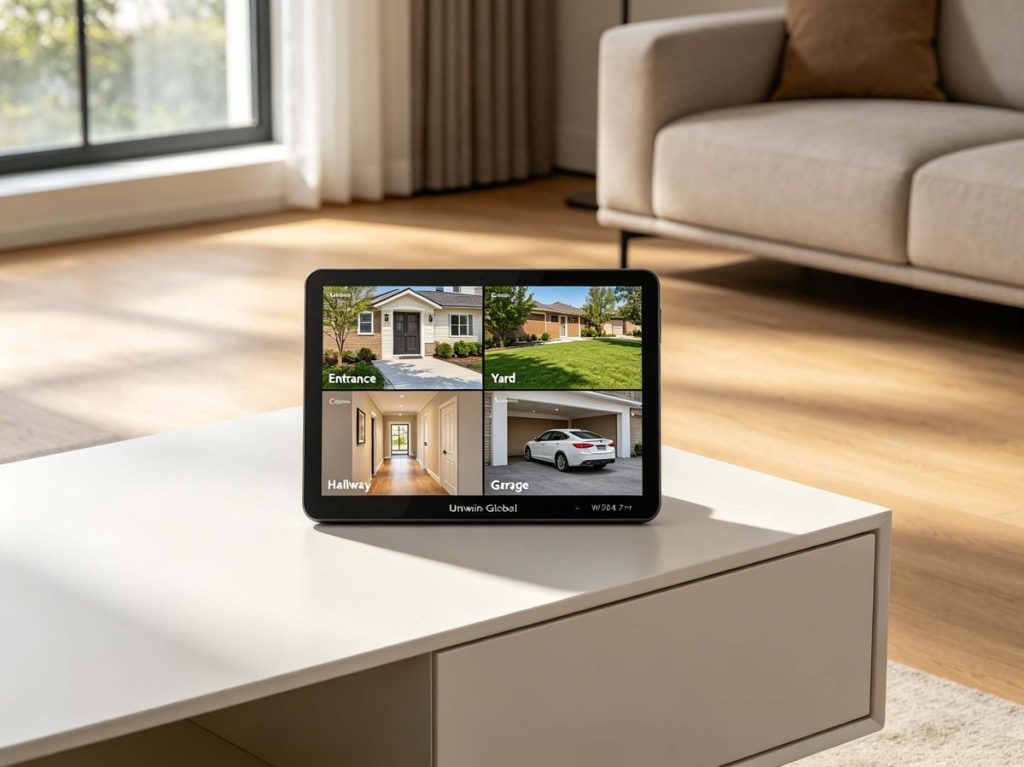
The unit connects up to 8 video doorbells or standard IP cameras. That matters because a villa’s entry points are rarely one. A gate bell, a front-door bell, and a driveway camera can all sit on the same intercom network, and the monitor picks the feeds up without a separate CCTV controller in the loop.
Household communication rounds the loop. Indoor units can call each other across the home, a remote door-open from the indoor unit covers the delivery-at-the-gate case, and an elevator call input is the usual addition where the villa has more than one level served by a lift. None of these calls depends on the internet; they are LAN calls.
Cameras, Detection, and Recording
Motion detection and human detection are the two detection functions carried on the outdoor side. Motion detection reacts to any change in the scene; human detection filters for people, which is what keeps the capture log short enough to review. Both can trigger automatic photo and video capture without anyone pressing a button. In a villa, most outdoor motion comes from leaves, lights, and animals; human detection is what keeps the useful events in the list.
Video message is the lighter-weight recording path. When no indoor unit answers, the visitor’s message stays on the door station for later review. It is not video storage; it is a message that expires. The captured material is tied to the event, so a review starts from the trigger rather than from a wall of raw footage.
Single-channel and multi-channel preview means one feed at a time or the four-way split, and the atmosphere light on the door station doubles as a status indicator after dark. Both are carried on the SIP video intercom terminals that Uniwin-Global manufactures, and neither needs a separate controller.
Power and Network: Why POE Simplifies a Villa Install
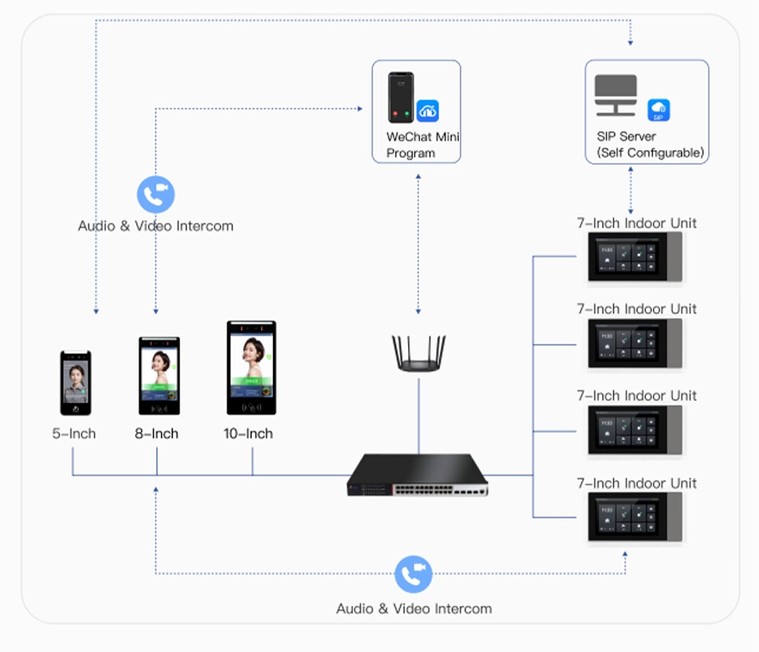
The video doorbell and the indoor unit both support POE power. One cable carries data and power, which changes the wiring plan for a new build: no low-voltage drops from a central panel to every entry point, just network runs to the devices that need them. The payback is in the install, not the hardware: fewer circuits to terminate and fewer points to trace when something misbehaves.
On the network side, the design is flat. Door stations, indoor units, and cameras all sit on the LAN and talk over SIP, so adding a second indoor unit to the kitchen or a second driveway camera does not change the architecture. One-click unlock, indoor and outdoor, works over the same connection, so the door hardware and the intercom share one management surface.
For a retrofit, POE keeps things recoverable. If a bell moves to a new gate position, moving the network point is simpler than chasing a pair of power wires that may have run behind plaster. The network plan stays the same either way.
Conclusion
An 8-zone villa intercom system is less about the doorbell and more about the monitoring layer: 8 wired defense zones, a four-segment indoor view, detection with automatic capture, and POE across the outdoor devices. That combination is what lets one intercom network cover entry, perimeter, and alarm in a single install. None of it changes what the system is: an intercom network first, with the security layer riding the same wiring.
If you are specifying a villa intercom system for a project and want the zone, camera, and power plan worked out in advance, Contact Uniwin-Global with the entry points and the sensor list in hand.
FAQ
Q: How many doorbells or cameras can one indoor monitor handle?
The indoor monitor connects up to 8 video doorbells or standard IP cameras on the same intercom network. One doorbell can call multiple indoor units at once, so a single gate station does not have to be the only point of contact across the property.
Q: What is a wired defense zone, and how many does the system support?
A wired defense zone is one physical circuit tied to a sensor or alarm device: a door contact, a motion line, or a smoke detector. The indoor unit’s alarm access function monitors 8 wired defense zones, and the four-segment view lets several of them be watched at the same time.
Q: Does the villa intercom run on POE power?
Yes. The video doorbell and the indoor unit both support POE, so one network cable carries data and power. For a new build that removes low-voltage wiring drops, and for a retrofit it keeps power simple where dedicated drops are not practical.
Q: Can one doorbell call several indoor units at once?
It can. The villa intercom system supports one doorbell calling multiple indoor units, and each indoor unit can monitor multiple doorbell devices in return. That covers the usual case where the gate, the front door, and the service entrance all need to reach more than one room.