Integrated Building Communication, Resident Intercom, Mobile Connectivity and Property Management
Solution overview for apartments, residential communities and modern smart buildings
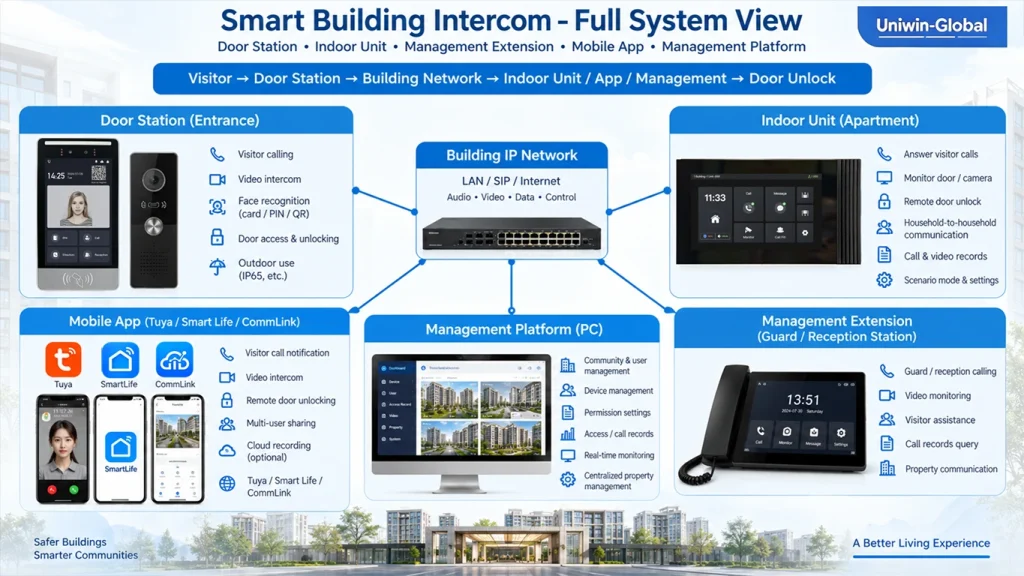
Full-view architecture of the Smart Building Intercom ecosystem.
Core solution focus
Door Station | Indoor Unit | Management Extension | Mobile App | Management Platform | SIP / LAN Communication
Smart Building SIP Intercom Solution integrates video intercom, resident communication, mobile connectivity, access management, and centralized property management into one connected building ecosystem. Through SIP/LAN communication, the system connects door stations, indoor units, management extensions, mobile apps, and the management platform, enabling convenient visitor communication, remote door unlocking, monitoring, and efficient property management. It is designed for apartments, residential communities, and modern smart buildings, providing a flexible and scalable solution for safer, smarter, and more connected living environments.
1. From Door Phone to a Complete Building Intercom Ecosystem
A modern building intercom system is no longer only a device installed beside the entrance. It is a coordinated communication and property-management system that connects visitors, residents, property staff and building entrances through IP networking.
Based on the supplied Community Building Video Intercom documentation, the system architecture can include door stations, indoor units, perimeter/gate stations, cameras, a mobile APP and a management platform. The indoor-unit connection capacity of up to 999 indoor units, several door stations and cameras, together with a perimeter gate station, APP and management platform.
The central of the solution is therefore building communication a visitor calls from an entrance, a resident or property-management endpoint receives the call, audio/video communication is established, and authorized users can remotely release the door. Access-control functions such as face, card, password and QR recognition strengthen the entrance layer, but they operate as part of the wider intercom ecosystem.
2. Overall Smart Building Intercom Architecture
The system can be designed around several coordinated layers. Door stations and perimeter stations form the entrance layer. Indoor units provide resident-side communication and monitoring. A management extension or guard/reception endpoint supports property staff and visitor assistance. Mobile applications extend intercom functions beyond the wall-mounted indoor unit, while the management platform provides centralized community, user, permission and record administration.
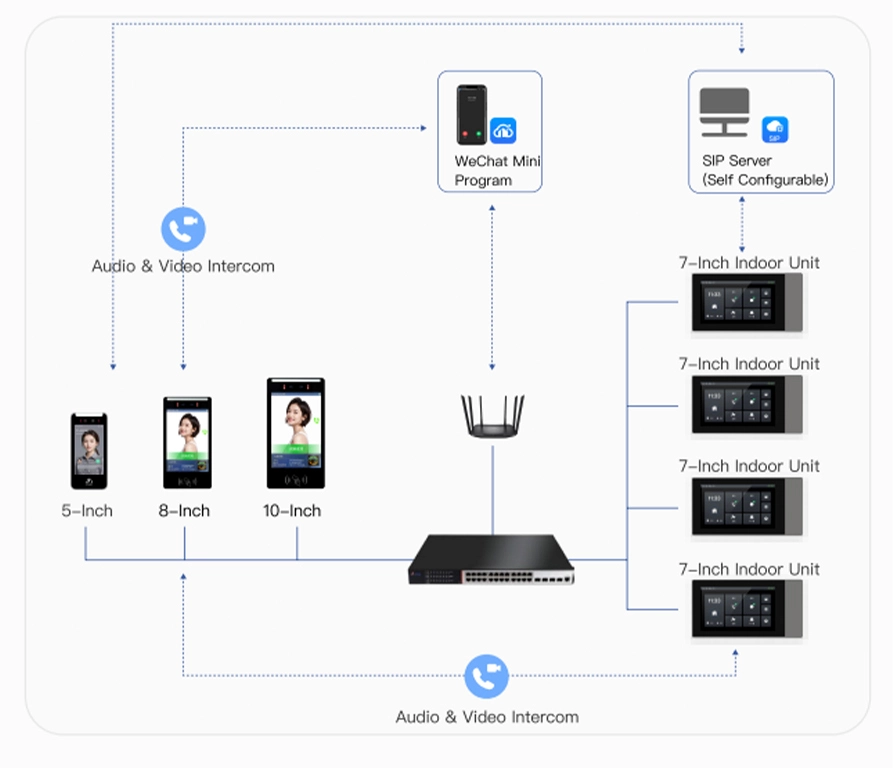
Example scalable intercom architecture with entrance terminals, indoor units, network connectivity, mini-program and SIP server.
3. Door Station The Building Entrance Communication Point
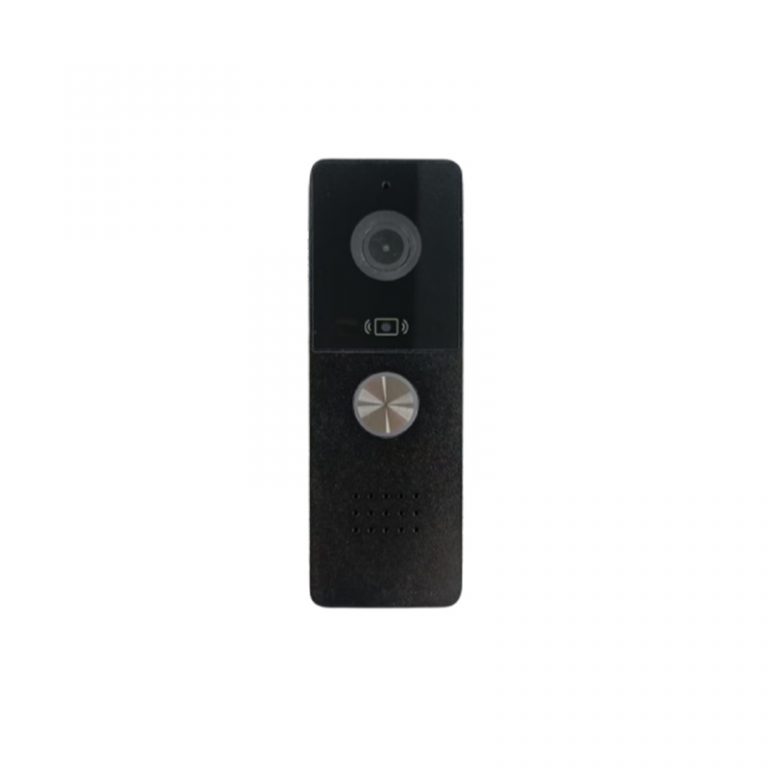
The door station is the visitor-facing endpoint of the building intercom system. Its primary role is to connect the entrance with residents or property-management personnel. According to the supplied facial access-control machine manual, the entrance device supports calling as well as multiple unlocking methods including APP, card, face, password, QR code and remote unlocking.
Building settings allow the device to work in LAN intercom mode or wider-area intercom mode. When LAN IP direct calling is enabled, calls to indoor units operate through the local network. This provides a practical architecture for projects that want local building communication without depending on an external service for every call.
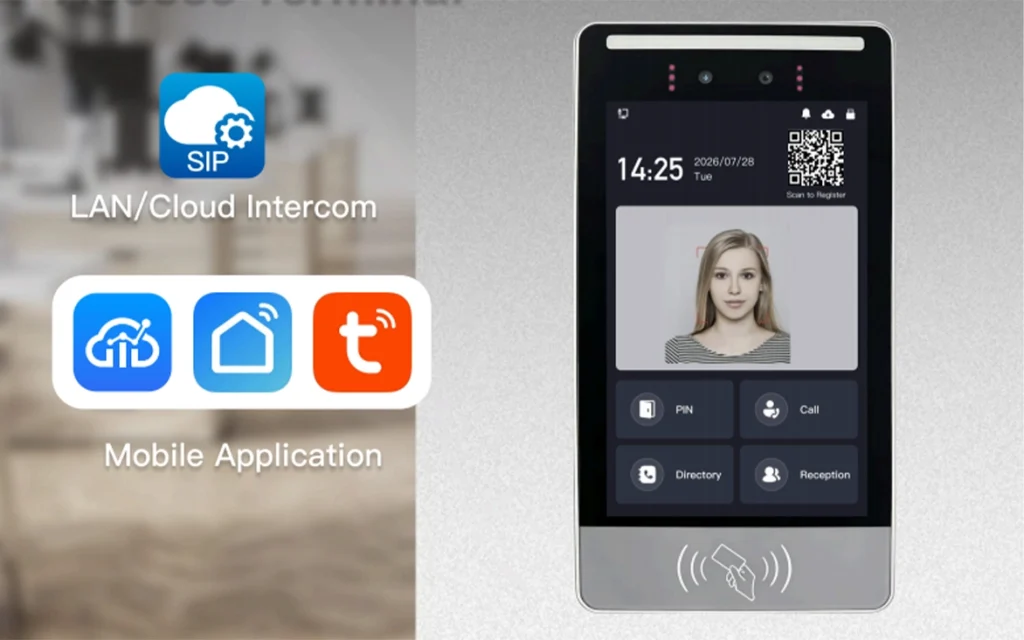
Entrance device with LAN/cloud intercom and supported mobile-application connectivity.
4. Indoor Unit Resident Communication and Monitoring Center
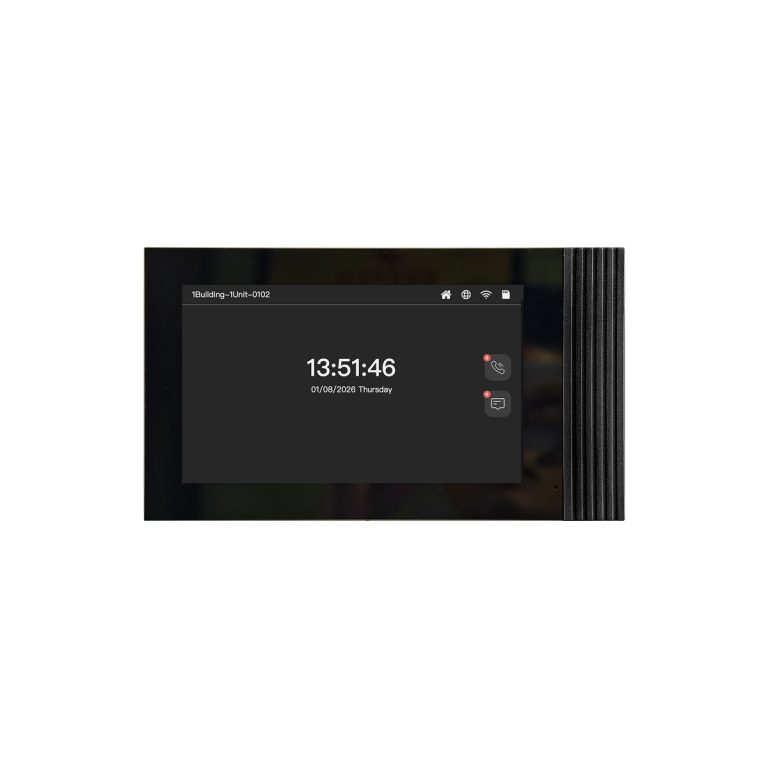
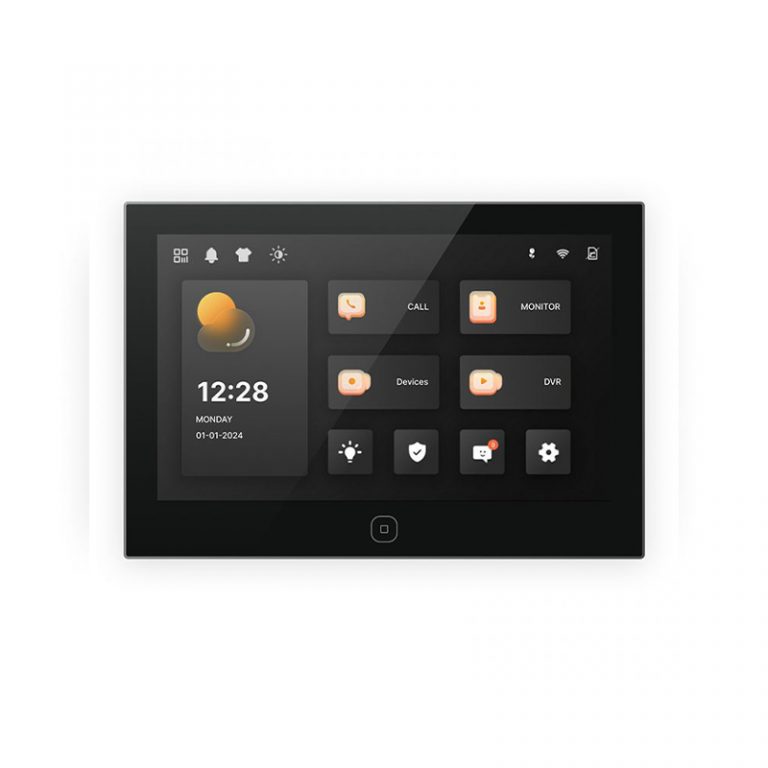
The indoor unit is a core component of the building intercom system. When a visitor calls, the resident can answer the call, view the visitor, communicate by audio/video and remotely unlock the connected entrance. The indoor-unit manual also describes door-station monitoring and camera monitoring, allowing residents to actively view supported entrance stations and CCTV cameras.
The indoor unit is not limited to visitor calls. It also supports household-to-household communication, call records and scenario modes. In At Home mode, visitor calls ring normally; in Away mode, the indoor unit can remain muted and the door station can prompt the visitor to leave a message; Do Not Disturb mode suppresses ringing.
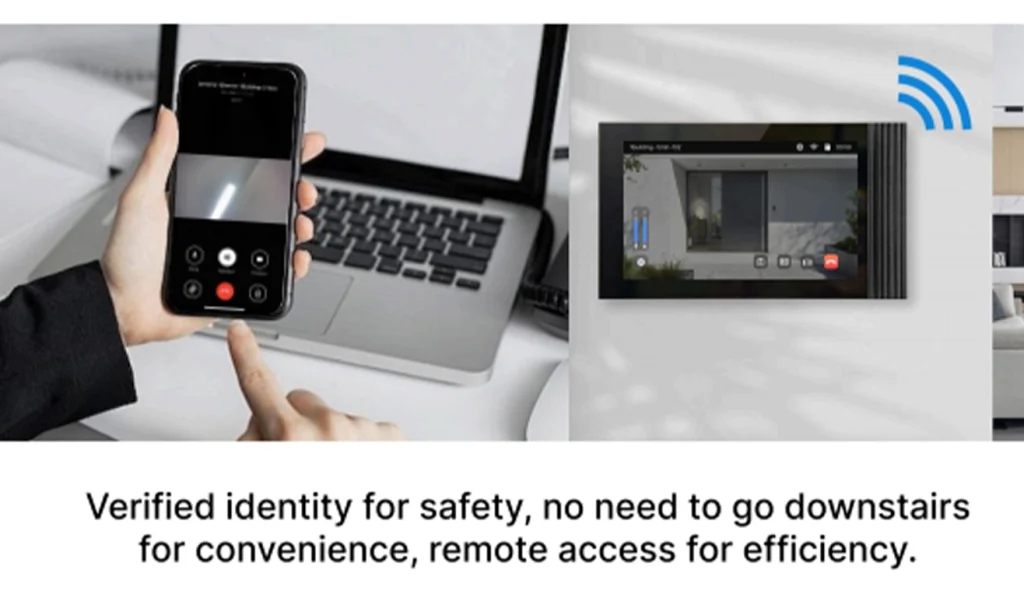
Residents can verify visitors remotely and manage access without going to the entrance.
5. SIP and LAN Intercom Communication
IP networking gives the building intercom system flexibility in how calls are organized. LAN intercom can be used for direct communication inside the building network. SIP-based architecture can be used where a SIP server is required to organize communication among multiple entrance and indoor endpoints.
For larger projects, this approach supports a scalable communication structure across multiple entrances and many indoor units. The supplied solution materials also show 1-to-1 and group communication concepts for SIP intercom applications.
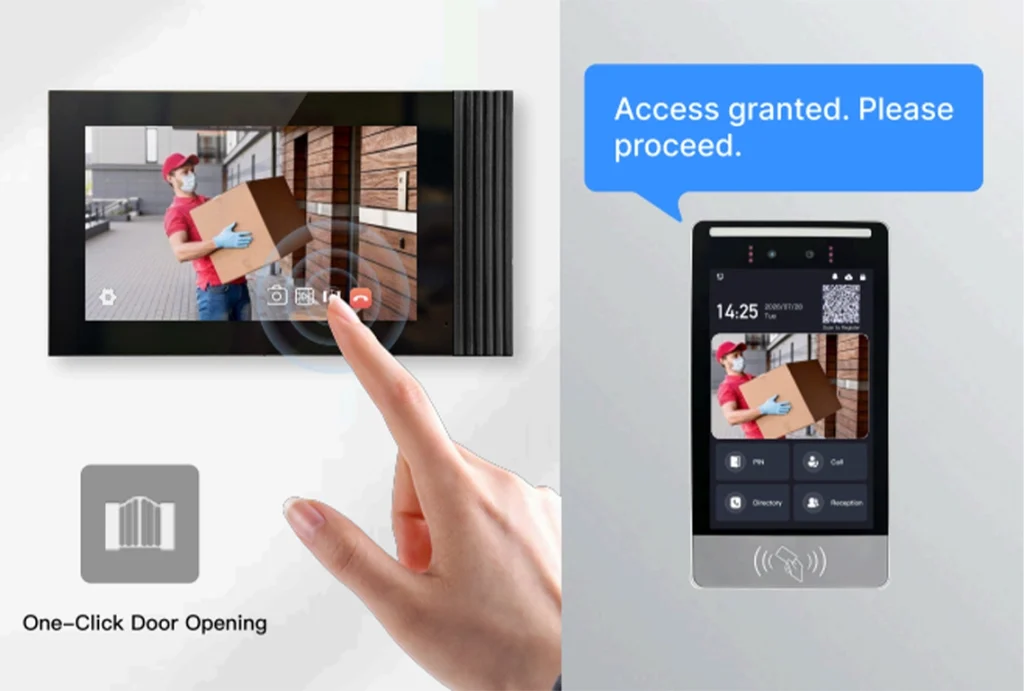
SIP video intercom enables high-definition audio/video communication among building endpoints.
Typical communication path
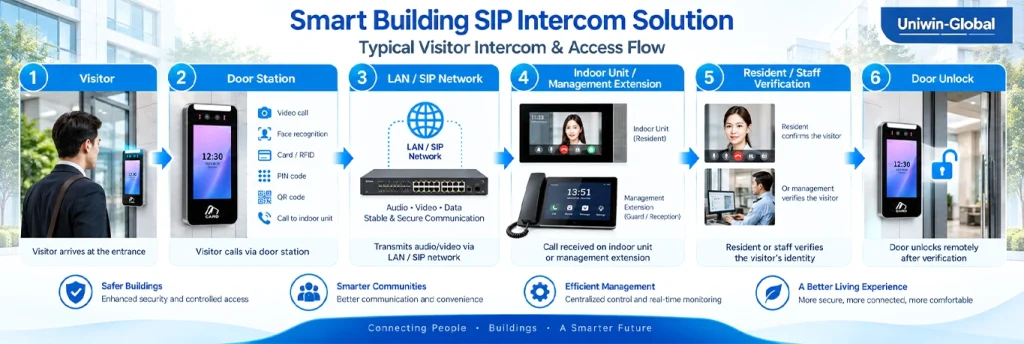
Visitor → Door Station → LAN / SIP Network → Indoor Unit or Management Endpoint → Resident/Staff Verification → Door Unlock
6. Mobile Intercom: CommLink, Tuya / Smart Life and Mini-Program Options
Mobile connectivity extends the building intercom beyond the indoor monitor. Depending on the selected project architecture, the supplied materials show CommLink, Tuya / Smart Life and mini-program intercom options. A door station can be configured to reach a mobile endpoint as well as an indoor unit, giving residents more flexibility in receiving visitor calls.
For overseas-market projects, Tuya / Smart Life integration can provide mobile video intercom, visitor-call notification and remote door unlocking in supported configurations. For China domestic-market applications, WeChat Mini Program intercom can provide a familiar mobile communication path. CommLink is also presented in the supplied building-intercom documentation as part of the mobile ecosystem.
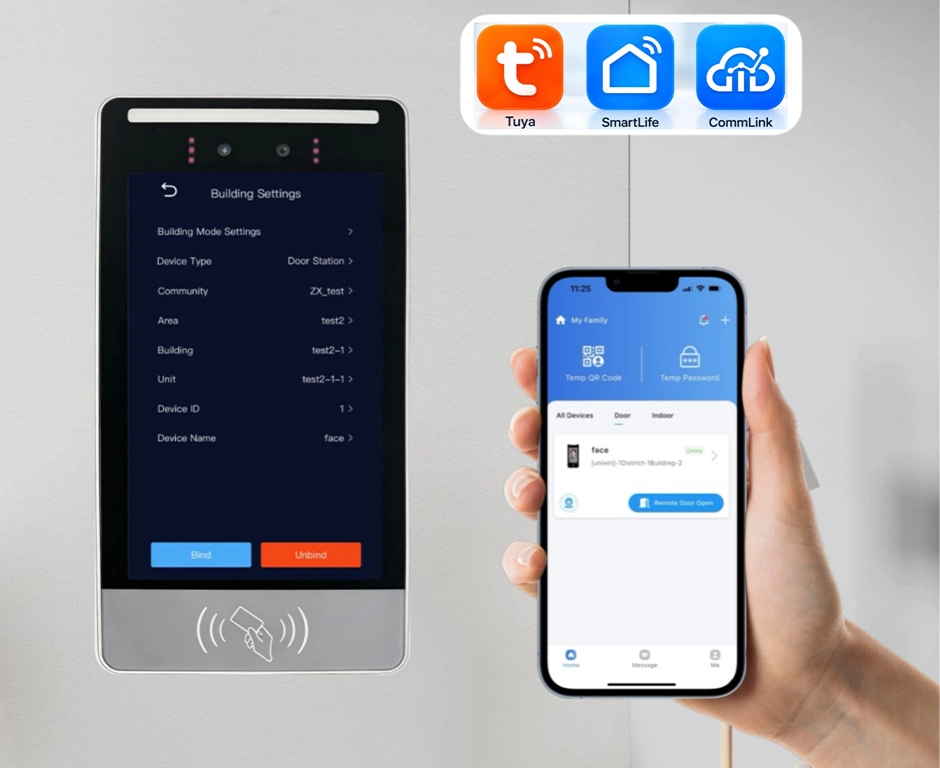
CommLink and Tuya / Smart Life mobile video intercom options.
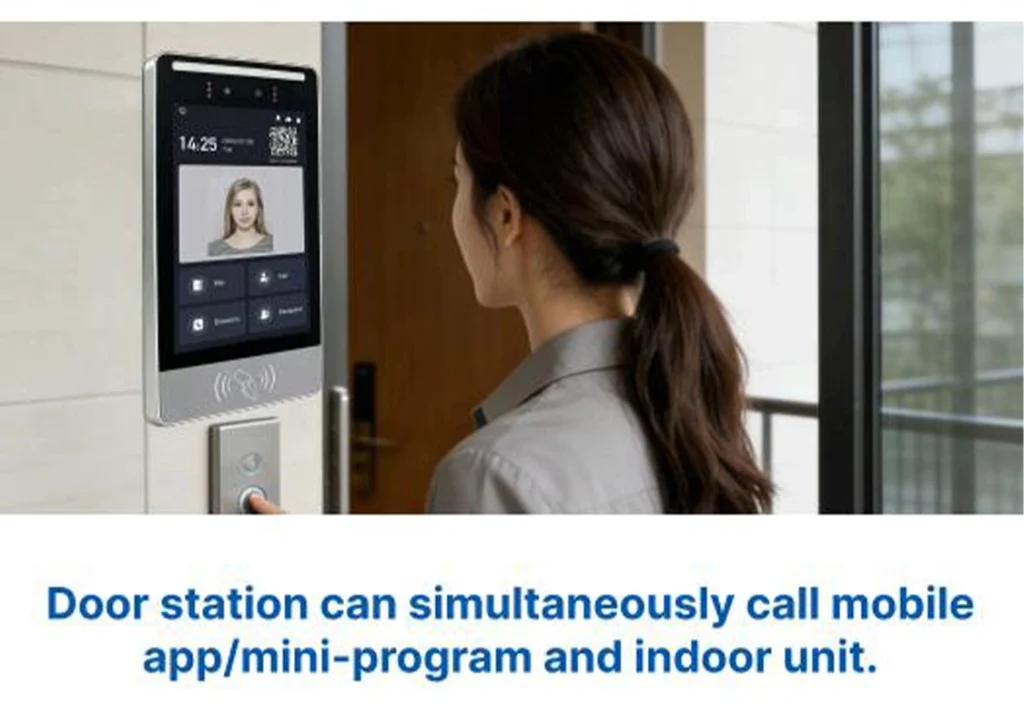
A door station can simultaneously call a supported mobile app / mini-program and an indoor unit.
7. Management Extension, Guard Station and Visitor Assistance
A complete building intercom solution must also support property-management personnel. The management extension or guard/reception endpoint provides a communication path when a visitor needs assistance, cannot reach a resident directly or requires authorization from property staff.
This creates a complete communication chain among the visitor, resident and property-management team. In a multi-building residential community, the management endpoint can serve as a centralized assistance point while individual residents continue to receive calls through indoor units or supported mobile applications.
8. Centralized Management Platform
The management platform forms the administrative layer of the solution. The supplied materials describe cloud online management, user management, permission control, access-record viewing, community creation and property management. This allows property personnel to manage the system at community level instead of configuring every device independently.
The entrance-device manual also includes property-management settings for community, area, building, unit and device information, showing how endpoints are organized within a structured residential deployment.
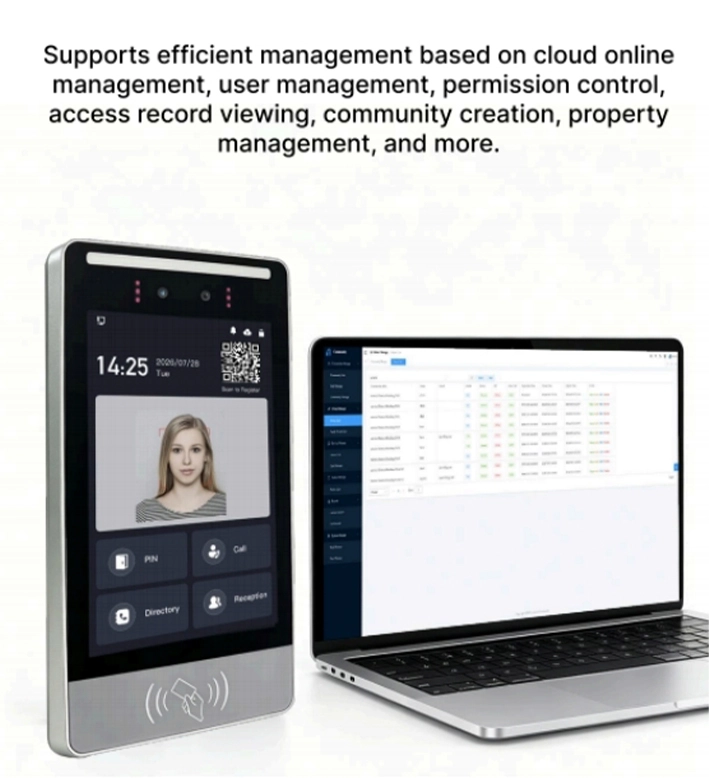
Centralized management platform for community, users, permissions and records.
9. Monitoring, Records and Resident Experience
Building intercom is not only about answering a live call. The indoor unit can maintain call logs and, when configured with storage, can automatically record video or take snapshots when the door station calls. It can also store camera-monitoring records. These functions give residents a practical record of visitor communication and monitoring activity.
The entrance device can also provide passage and call records. Passage records can include unlocking time, unlocking method and unlocking personnel, while call records show call time, direction and call characteristics. This information supports day-to-day property operation and incident review.
10. Smart Entrance Access as an Integrated Capability
AI access control is an important feature of the entrance device, but it is not only the Building Intercom solution. It complements visitor communication by allowing authorized residents or personnel to enter without initiating an intercom call.
Depending on the selected device and configuration, supported unlocking methods in the supplied manuals include APP, card, facial recognition, password, QR code and remote unlocking. These options allow the entrance layer to support both resident self-access and visitor intercom within the same building system.
- Face recognition for contactless resident or staff access
- IC/RFID card for authorized users
- Password/PIN and QR code for alternative access workflows
- Remote unlocking from indoor or supported mobile endpoints
- Access records for property-management review
11. Deployment Scenarios
| Scenario | Building Intercom Structure |
| Apartment / Residential Building | Door station + indoor units + mobile intercom + management platform |
| Large Residential Community | Perimeter/gate station + multiple door stations + many indoor units + management extension + management platform |
| Multi-Building Community | Area/building/unit structured device management + LAN/SIP communication + centralized property management |
| Villa / Small Property | Compact door station + indoor monitor + supported mobile video intercom and remote unlocking |
| Managed Residential Property | Door stations + indoor units + guard/reception assistance + centralized user and record management |
12. Why Use a Unified Building Intercom Architecture?
- Connects door stations, indoor units, management personnel, mobile endpoints and the management platform in one coordinated system.
- Supports local LAN intercom and scalable SIP-based communication according to project architecture.
- Allows residents to answer visitor calls, monitor entrances and remotely unlock doors from the indoor unit.
- Extends visitor communication to supported mobile apps or mini-programs.
- Provides centralized community, user, permission and record management for property staff.
- Integrates access-control methods at the entrance without making AI access control the core of the solution.
- Can scale from a small property to a large residential community with many indoor units and multiple entrances.
Conclusion
The Smart Building SIP Intercom Solution is best understood as a complete building communication and property-management ecosystem. Door stations connect visitors to the building, indoor units connect residents to entrances and cameras, management extensions support guard and reception workflows, mobile applications extend communication beyond the apartment, and the management platform organizes communities, users, permissions and records.
SIP and LAN networking provide the communication foundation, while access-control technologies strengthen the entrance as an integrated supporting function. This system-level approach is suitable for apartments, residential communities, multi-building developments and other smart-building projects that need reliable visitor communication, resident convenience and centralized property management.
Uniwin-Global is committed to providing reliable intelligent solutions, security, efficiency, Building management, and Smart Building SIP intercom solution.