Modern buildings require more than a basic doorbell or standalone intercom. Apartments, offices, commercial properties, and residential communities increasingly require reliable video intercom and access control systems. These systems can support visitor identification, real-time two-way audio and video communication, remote door release, and integration with building management platforms. A SIP video intercom system easily merges these tasks over an IP network.
At Uniwin-Global, we create IoT smart devices and unified solutions. These offerings cover SIP-based intercom systems, access control, intelligent terminals, embedded hardware, software, apps, and platform services. Because of this, we treat SIP intercom not just as a basic door phone. Instead, we see it as a vital part of a full smart access ecosystem.
What Is a SIP Video Intercom System?
SIP (Session Initiation Protocol) is a signaling protocol used to establish, modify, and terminate real-time communication sessions such as voice and video calls over IP networks. In a building intercom system, a SIP-enabled door station can initiate a SIP call to another endpoint, such as an indoor monitor, SIP phone, security desk, or mobile application. The receiving endpoint may be an indoor monitor, SIP phone, security console, management center, or compatible mobile application.
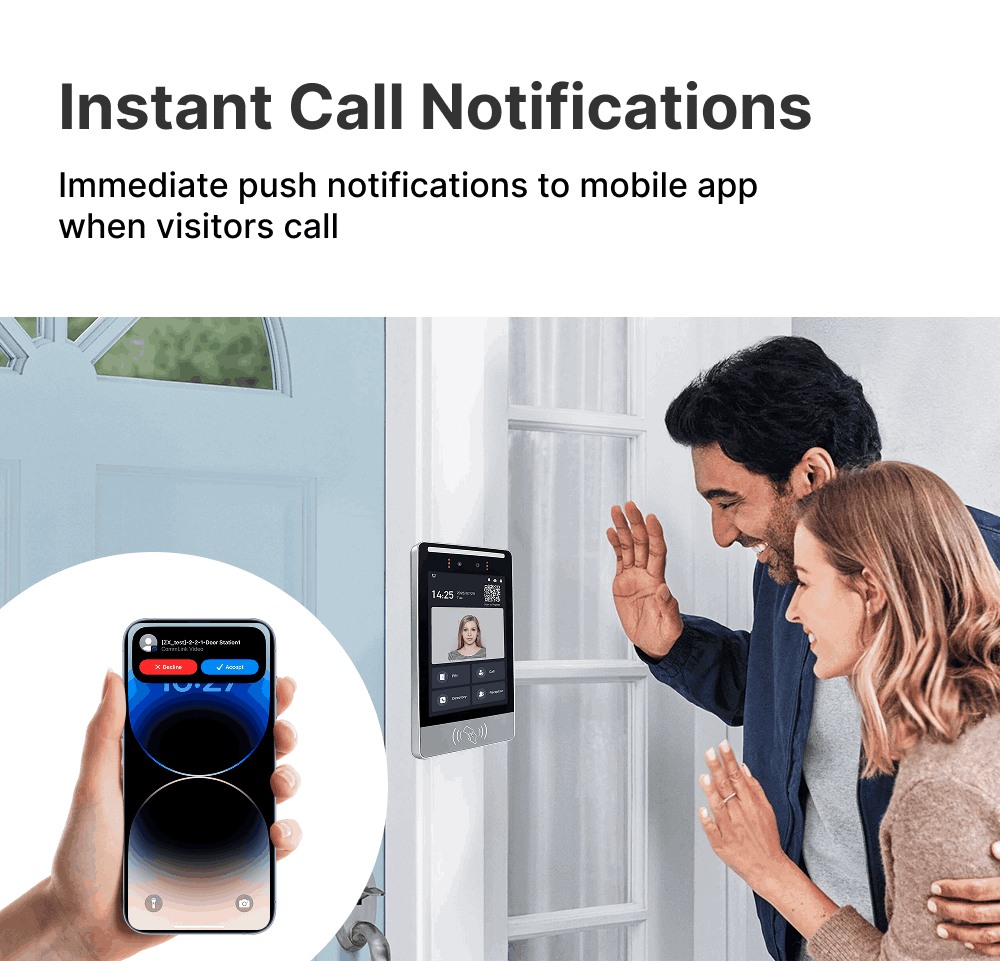
Therefore, a SIP video intercom merges communication, guest checking, and door entry. A visitor initiates a call from the entrance door station. The resident, security operator, or authorized user can then view the visitor and communicate with them through two-way audio and video. After visually verifying the visitor, an authorized user can remotely release the connected electric lock.
Compared with traditional analog intercom systems, SIP-based systems can offer greater flexibility for IP networking, multi-endpoint communication, centralized management, and integration with other IP-based systems. These deployments are particularly relevant when a project requires IP networking, centralized management, multiple endpoints, remote communication, and future scalability.
How Does a SIP Video Intercom System Work?
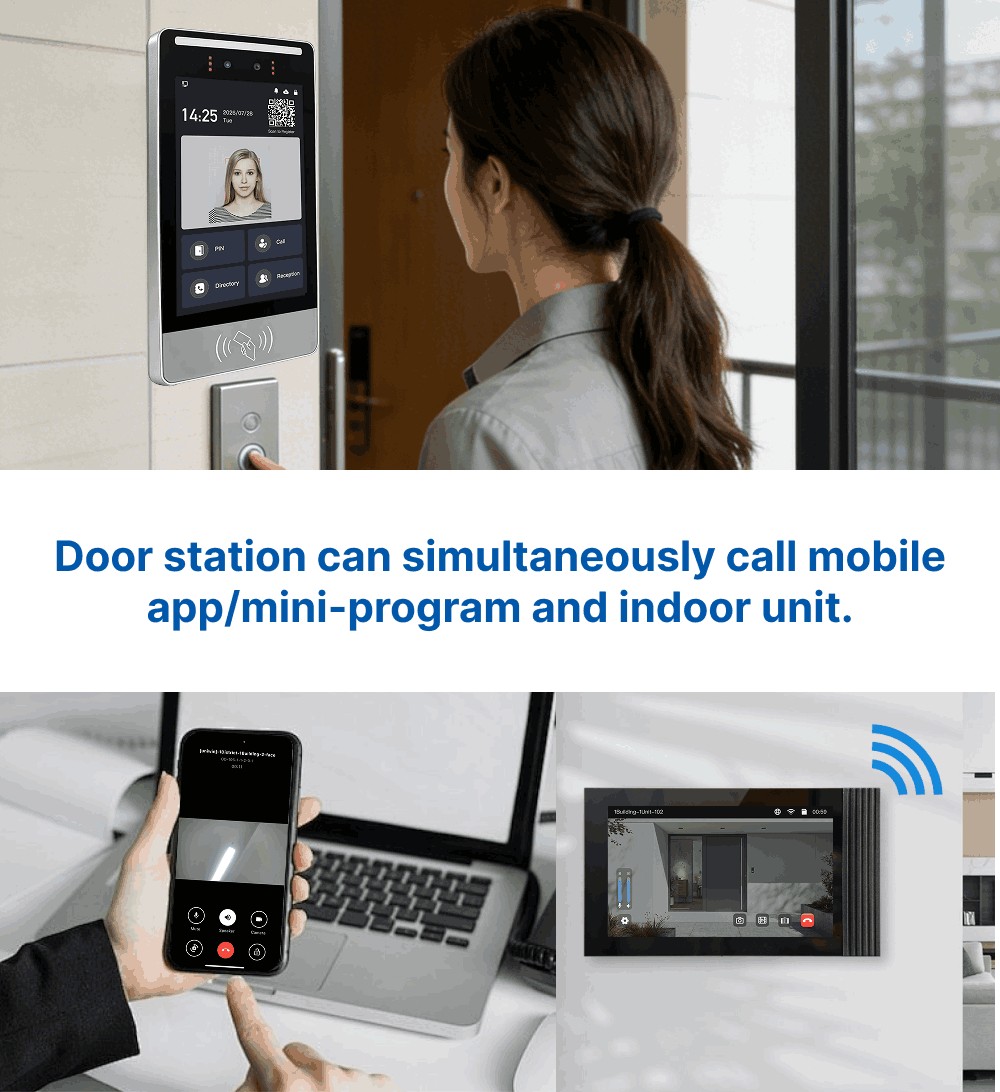
First, the guest uses the outdoor SIP Door Station. The door station sends SIP signaling to initiate a call through the IP network. It goes to a specific endpoint. Depending on the system architecture, the call may be routed to an indoor station, SIP phone, security console, management platform, or mobile SIP client.
Once the call is answered, the system establishes a two-way audio and video session between the visitor and the authorized user. This lets the resident or staff member check the guest. If access is authorized, the user can remotely release the connected electric lock.
The exact layout depends on the location. A single villa might need only a few endpoints. Meanwhile, a large apartment community might need many entrance devices, residents, management users, and access-control logs.
What Are the Main Components?
A standard SIP video intercom system is built from a few main parts. These essential pieces usually feature a SIP door station. The setup also needs IP network infrastructure. Furthermore, you will find receiving SIP endpoints in the mix. Finally, access control hardware and management software complete the whole system.
The door station usually combines a display with a camera. It also packs a microphone, a speaker, and a call button. Access control interfaces are built into the unit as well. Higher-end models can handle different ways to enter a building. These methods include facial recognition and RFID/IC cards. Users can also use PIN codes, QR codes, or mobile-based access.
Ethernet delivers a very stable wired network connection. Because of this, installers frequently use it for IP intercom deployments. Sometimes, wired Ethernet is hard to reach or simply will not work. In those specific cases, Wi-Fi and cellular connectivity offer great backup choices. The receiving endpoints can vary based on your exact needs. They might be indoor monitors or security desks. SIP phones and mobile apps work just as well for this task.
From Video Intercom to Intelligent Access Control
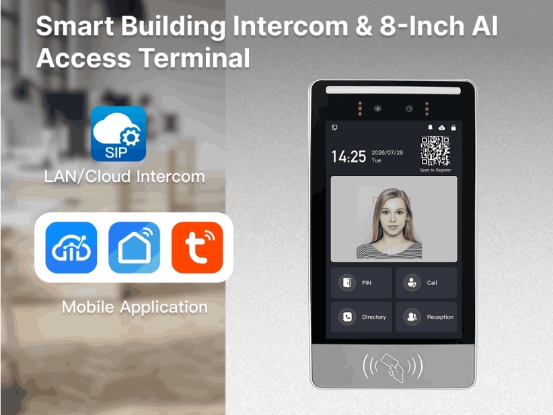
Current projects often want one entrance device to handle both chats and ID checks. A great example is the WB801 (8-inch Door Phone) from Uniwin-Global.
The WB801 is an 8-inch AI smart access terminal. It is designed for residential and commercial video intercom and access control applications. It supports SIP HD audio and video chats. Also, it offers one-tap remote door release. Users can conduct full-duplex two-way audio communication through the CommLink App or Tuya Smart App.
For access control, the device supports face recognition, IC/RFID cards, PIN codes, QR codes, and mobile-app remote unlocking. It holds room for 20,000 faces and 20,000 cards. The specified facial recognition distance is 0.5–1.5 meters. Built-in liveness detection helps mitigate presentation attacks involving photos, videos, and 3D face masks.
The WB801 (8-inch Door Phone) features an 8-inch IPS LCD with 800 × 1280 resolution. It includes capacitive touch, a dual-lens camera, LED and infrared fill light, and night-vision support. Network links include Ethernet, 2.4GHz Wi-Fi, and an optional 4G module. The device has an IP65-rated enclosure. You can mount it on a wall or a column.
SIP Video Intercom vs. Traditional Intercom
One of the key differences between SIP-based and traditional analog intercom systems is their communication architecture. SIP systems use IP networking and standardized signaling, while traditional analog systems typically rely on dedicated wiring and proprietary or system-specific signaling. Traditional intercom systems often use dedicated cabling, bus wiring, or proprietary system architectures. In contrast, SIP systems use IP networking and standardized signaling, which can simplify communication between different SIP endpoints and facilitate integration with IP-based systems. It also helps blend the intercom with larger building systems.
For a basic standalone door, an older system might still work fine. However, some projects need central control, mobile chats, or access-control links. They might span multiple buildings or need easy upgrades. For these cases, a SIP-based design offers much greater freedom.
This freedom is highly useful for system builders. It allows the intercom to act as part of a larger smart building setup. It does not have to run as a lonely chat device.
Where Are SIP Video Intercom Systems Used?
SIP intercom systems are used in apartment buildings, residential communities, villas, offices, commercial buildings, campuses, and other secure access points.
In apartment projects, the setup can link shared doors with residents and property staff. In villas, it can handle direct guest chats and remote door opening. For offices and commercial spaces, the intercom can integrate with ID checks and access logs.
At Uniwin-Global, we build solutions for many needs. We cover SIP apartment and community intercom systems, SIP villa intercom solutions, AI access control, and smart door management. We combine hardware, firmware, software, mobile applications, communication protocols, and platform services to support different project requirements.
How to Choose a SIP Video Intercom System
Determine the number of entrance points, users, buildings, and receiving endpoints. Next, evaluate the available network infrastructure. Decide if you need Ethernet, Wi-Fi, or another type of link.
After that, review the access methods. Some sites only need guest calls and remote unlocking. Others require face recognition, RFID cards, PINs, QR codes, or multiple ways combined. For outdoor installations, also evaluate the IP rating, operating temperature range, camera resolution, field of view, low-light performance, illumination, and mounting method.
System builders and device brands should also look at custom needs. At Uniwin-Global, our OEM/ODM skills cover many areas. We handle hardware and software creation, case and frame design, and solution planning. We also do system building, custom setups, OS loading, system checks, weather and EMC tests, and custom packing.
These capabilities are particularly relevant to projects that require customized hardware, software, industrial design, or system integration.
Conclusion
A SIP video intercom system combines IP-based voice and video communication with visitor verification and door access control. It links guest chats, ID checks, remote door control, and access management. It does all this through an IP-based layout.
Some projects need SIP video chats along with face recognition, multiple access methods, mobile unlocking, and tough hardware. For these needs, the WB801 (8-inch Door Phone) shows how these tools can fit into one single device.
At Uniwin-Global, we build IoT smart devices and full smart system solutions for real-world sites. If you are planning an apartment intercom, villa intercom, commercial access control, or custom OEM/ODM setup, our team can help. We can review the hardware, software, network, and system-link needs with you.
FAQ
Q: What does SIP mean in a video intercom system?
A: SIP stands for Session Initiation Protocol. It is used to start and run IP-based audio or video chats between the entrance device and receiving endpoints.
Q: Can a SIP video intercom also control door access?
A: Yes. Depending on the system design, a SIP video intercom can interface with an electric lock or access controller to enable remote door release. Advanced models can also combine intercom tasks with face recognition, cards, PIN codes, QR codes, or mobile access.
Q: Can a SIP intercom work over Wi-Fi?
A: It depends on the exact device. The WB801 (8-inch Door Phone), for example, supports Ethernet and 2.4GHz Wi-Fi. It also offers an optional 4G module. This gives system builders more choices when planning network links.
Q: Is a SIP video intercom suitable for apartment buildings?
A: Yes. SIP systems are a great fit for apartment and residential community sites. These sites often need network-based chats, many endpoints, central control, guest checks, and links with access control.
Q: What should I check before choosing a SIP door phone?
A: Check SIP support, network choices, audio and video features, and access methods. Also, look at user limits, weather protection, mounting rules, remote-control needs, and the custom needs of your project. For large or custom sites, it is also vital to see if the maker can support hardware, software, and system-level links.