Why Face Recognition Access Control Systems Fail
In the fast-changing landscape of IoT and intelligent building systems, facial recognition has progressed from being an advanced technology to becoming a must-have security measure in modern apartments, villas, and office buildings. Nevertheless, whereas software solutions tend to draw all the attention, the effectiveness of facial recognition technology is contingent upon the hardware configuration on which it runs. Property owners and building security system providers usually experience annoying problems such as slow responses to commands in summertime or failure to recognize faces in dark settings without understanding that they stem from poor hardware design. As a professional manufacturer specializing in access control hardware solution designs, Uniwin-Global understands that a seamless user experience requires more than just code; it requires a robust, high-performance architectural core. In this article, we analyze the underlying hardware bottlenecks that commonly affect face recognition access control systems and explore how our advanced embedded AI board technology is solving these challenges to provide 24/7 security.
Environmental Barriers to Recognition Accuracy
Glare and Dynamic Light Challenges
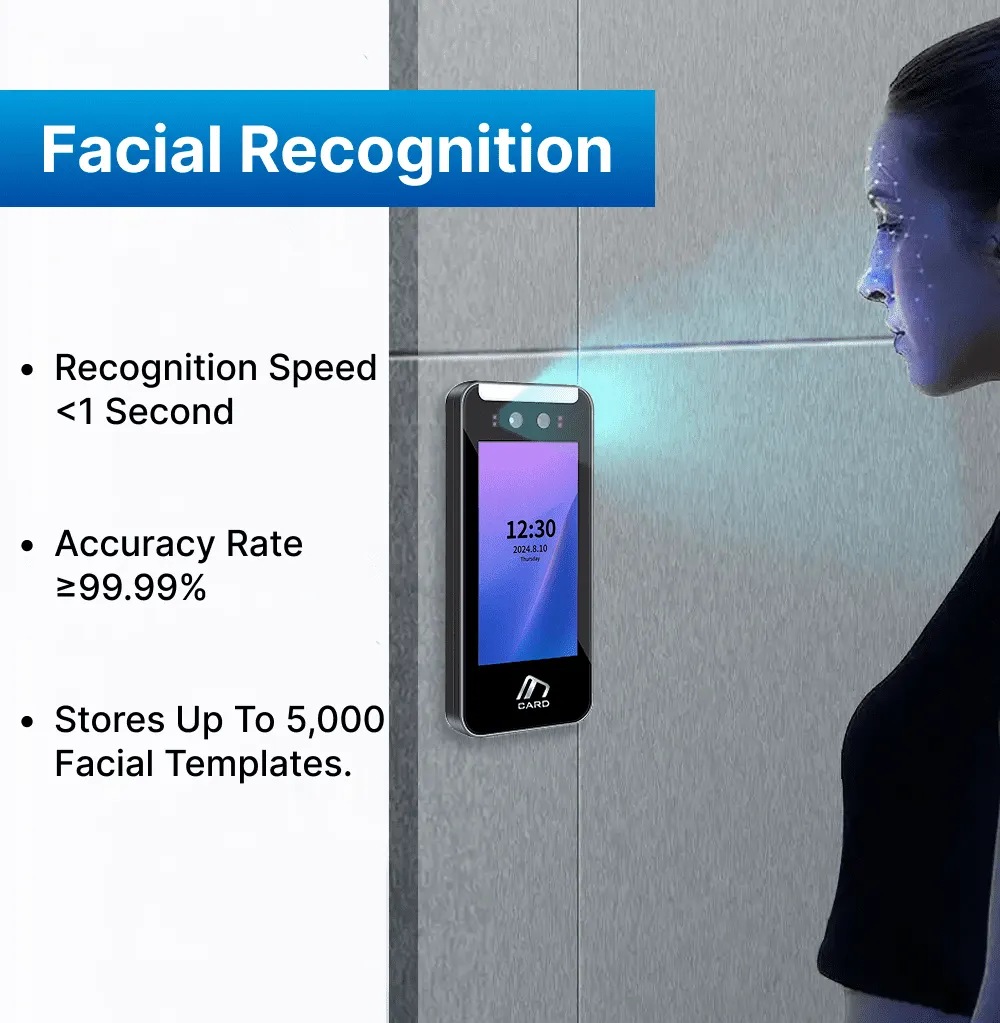
Most regular cameras have a problem with backlight or glare, which is when the sun is behind a person’s head and makes the face look very dark, so that the AI cannot recognize the person’s facial features. This issue is overcome by the use of high definition wide dynamic range cameras in our premium products such as the WO501, which uses binocular cameras designed to work effectively under difficult conditions, adjusting the brightness between the background and the person’s face.
Overcoming Nighttime Identification Failures
Identification often fails at night because of insufficient infrared (IR) illumination or sensor noise. A high-quality face recognition motherboard must support sophisticated image signal processing (ISP) to handle low-light data. Our WR501 (5-inch attendance terminal) and WO801 (8-inch outdoor station) integrate advanced binocular liveness detection and wide-dynamic sensors that allow for person-passing photo retention even in near-total darkness, preventing unauthorized entry during the most vulnerable hours.

Core Hardware Limitations Affecting Performance
Insufficient CPU Processing Power
Recognition speed and accuracy are directly tied to the CPU’s ability to run complex neural networks. Many budget systems use entry-level chips that struggle with large databases.
Camera and Motherboard Compatibility Issues
A common hidden failure point is the communication link between the camera module and the mainboard. If the face recognition motherboard lacks high-speed interfaces like MIPI CSI or has poor driver optimization, the video feed will experience latency or “frame drops”.
Thermal Impacts on System Reliability
High Temperatures and Speed Degradation
When a smart facial recognition terminal is exposed to direct sunlight in summer, internal temperatures can soar. Many standard processors may enter thermal throttling mode when junction temperatures exceed the designed operating range—leading to a significant drop in recognition speed. We design our AI access control hardware with industrial-grade components and efficient heat dissipation layouts to maintain peak performance even in extreme heat.
Maintaining Stability in Harsh Environments
Reliability isn’t just about heat; it’s about consistency. Uniwin-Global ensures that all materials used in our boards are original and packaged with strict selection requirements from the PCB to individual capacitors. This commitment to quality keeps our defect rate below 1%, providing a stable 1-year warranty period for our motherboards.
Superior Performance via EEASYTECH Chip Solutions
Optimizing AI Algorithm Execution
Our E830-V is a prime example of hardware-algorithm synergy. It is highly cost-effective and supports dynamic face recognition for up to 2,000 face databases.
Advanced Image Processing Capabilities
The EEASYTECH platforms we deploy, excel in image processing. These boards serve as the image acquisition and preprocessing layer of the access control system, filtering out noise and enhancing contrast automatically, which is critical for accurate liveness detection, preventing photo spoofing and presentation attacks where a person tries to trick the system with a printed picture.
Efficient Low Power Continuous Operation
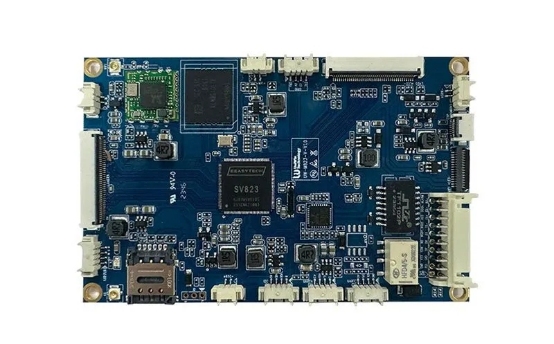
Access control systems must run 24/7. High power consumption leads to heat and shortened lifespans. The EEASYTECH-based solutions are designed for high efficiency, allowing terminals like the WO501 Smart Life Video Intercom to remain powered on indefinitely without performance degradation or excessive energy costs.
Uniwin-Global Hardware Excellence
High-Performance Face Recognition Terminals
Our product lineup includes versatile options like the WO523M 5-Inch SIP Video Intercom, which is a high-capacity terminal designed for modern apartments. For those requiring larger displays, the WO802 8-Inch SIP Video Intercom offers an expansive interface while maintaining the same high-security standards. We even provide specialized solutions like the WR711 7-Inch Face Recognition Locker System for intelligent storage applications.
Customizable Face Recognition Motherboard Options
Every project has unique requirements. Beyond our standard models, we offer extensive OEM/ODM services. Whether you need a specific form factor (5″, 7″, 8″, or 10.1″) or a customized function combination, our R&D team can deliver a tailored PCBA solution in as little as 45 working days. Our motherboards, such as the Allwinner A40i and RK3399, support various operating systems including Android and Linux, providing the flexibility developers need to create bespoke security applications.
Conclusion
The true effectiveness of a face recognition system is not determined in a controlled lab, but in the unpredictable conditions of the real world. Hidden hardware problems—ranging from thermal throttling to CPU bottlenecks—can turn a high-tech security investment into a liability. By prioritizing professional-grade AI access control hardware and optimized chipsets like those from the EEASYTECH platforms, Uniwin-Global ensures that recognition is fast, accurate, and reliable 24/7. Investing in the right face recognition motherboard is the key to transforming a basic entry point into a sophisticated, future-proof smart security node. From villa intercoms like the WI704 to massive apartment systems, we are committed to delivering stable and scalable hardware platforms for smart security applications.
Ready to upgrade your security with a professional-grade access control hardware solution? Contact Uniwin-Global today to discuss your OEM/ODM needs and get a customized quote!
FAQ
Q: Why does my face recognition system slow down in hot weather?
A: High temperatures can cause hardware components to overheat, leading to thermal throttling, where the CPU reduces its clock speed to prevent damage. This directly impacts the processing time for AI algorithms. Uniwin-Global addresses this by using industrial-grade components and optimized motherboard designs that maintain high recognition speeds even in harsh environments.
Q: Can face recognition work in total darkness?
A: Standard cameras struggle in low light, but advanced terminals like the WO501 utilize binocular wide-dynamic high-definition cameras. These are designed to adapt to harsh environments, including both strong glare and weak light, ensuring high accuracy and fast recognition speed regardless of the time of day.
Q: Does Uniwin-Global provide customized hardware for specific projects?
A: Yes, we have over 10 years of OEM/ODM experience. We can provide customized industrial motherboards in various sizes and function combinations, with a typical development cycle of 45 days for boards and 60 days for completely customized terminals.