Traditional analog intercom systems still serve many apartment buildings, residential communities, offices, campuses, and commercial properties. For basic entrance-to-indoor station voice communication, these systems may continue to operate. The problem appears when building security requirements expand beyond a simple conversation at the entrance.
Modern properties increasingly need visual visitor verification, multi-factor authentication, remote door access, remote door access, access records, centralized management, and integration with cameras or alarm systems. This is why a SIP Video Intercom is increasingly considered part of a broader building security upgrade rather than simply a replacement for an outdated analog intercom system.
At Uniwin-Global, we provide SIP intercom hardware, smart access control terminals, embedded IoT solutions, and OEM/ODM system development services. Our current business includes SIP-based apartment and community access control as well as villa intercom solutions, helping us understand how entrance communication integrates with modern building security requirements.
Traditional Analog Intercom System vs SIP Video Intercom System
The main difference is not simply analog versus digital. It is the range of security workflows each architecture can support.
| Security Requirement | Traditional Analog Intercom System | SIP Video Intercom System |
| Visitor communication | Mainly voice communication | Two-way audio and video communication |
| Visual verification | Limited or unavailable | Real-time visitor video verification |
| Authentication | Usually limited | Multi-factor authentication options |
| Remote access | Limited | Mobile app and remote access support |
| Access records | Limited or unavailable | Digital access logs and centralized management |
| CCTV / alarm integration | Difficult with legacy architecture | Flexible IP-based integration |
| Expansion capability | Wiring-dependent | Network-based scalability |
| Centralized management | Limited | LAN/WAN/cloud-based management |
A modern SIP system therefore acts as an entrance-security endpoint that can connect communication, authentication, access control, and management.
7 Security Risks of Traditional Analog Intercom Systems
Risk 1: Limited Visitor Verification Reduces Entrance Security Control
With a traditional audio intercom, residents often decide whether to unlock the door based only on a visitor’s voice. This provides limited protection against unauthorized access attempts or identity deception.
Video intercom adds an important verification layer. Residents or security personnel can see the person at the entrance before granting access.
For example, the WO802 8-Inch SIP Video Intercom & High-Capacity Face Recognition Terminal uses dual-lens wide dynamic camera and supports SIP point-to-point and group audio/video communication. Its camera system supports enhanced low-light visibility, helping maintain visual verification under different lighting conditions.
Risk 2: Single Access Credentials Can Be Shared, Lost, or Misused
Keys, cards, and shared PIN codes are convenient, but possession of a credential does not always prove the user’s identity.
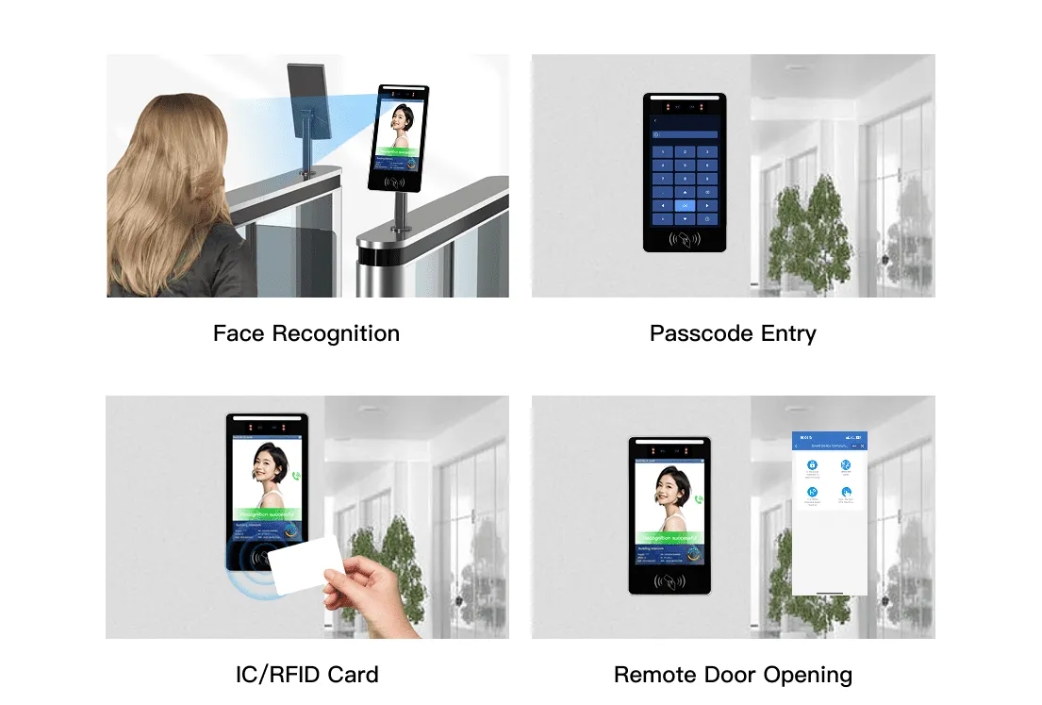
Modern smart access control can combine multiple authentication methods. Depending on the terminal, these may include face recognition, IC/RFID cards, passwords, QR codes, fingerprints, palm vein recognition, and mobile authorization.
The WO802 supports several of these methods as well as combination authentication. It also includes liveness detection functions designed to help reduce spoofing risks from common presentation attacks, such as using photos, videos, or artificial replicas for identity spoofing.
For buildings with different security levels, this flexibility allows managers to apply authentication methods according to the actual entrance risk instead of relying on one credential type everywhere.
Risk 3: Fixed Indoor Stations Limit Remote Response
Traditional intercom systems normally assume that someone is physically present beside an indoor monitor or reception desk.
That becomes inconvenient when residents are away, property managers supervise multiple entrances, or maintenance personnel arrive outside normal working hours.
A SIP-based system can extend visitor communication beyond a fixed location. Uniwin-Global’s apartment intercom solution supports communication between outdoor and indoor stations, app-based intercom, multiple indoor sub-stations, remote unlocking, and monitoring through SIP-compatible mobile applications, indoor monitors, or management platforms.
This gives residents and building managers more control over how visitor access is handled.
Risk 4: Limited Access Records Make Incidents Harder to Trace
Basic analog intercoms focus on real-time communication. They may provide little information about who entered, which credential was used, or when a door was opened.
For security teams, that lack of traceability becomes important after an unauthorized entry or access dispute.
A networked access control platform can record access events, visitor information, and door access logs.
Digital records do not prevent every incident, but they provide useful information for investigation and operational review.
Risk 5: Standalone Intercoms Create Fragmented Security Management
An older building may have one system for intercom, another for CCTV, another for access control, and another for alarms. During an incident, staff may need to switch between several disconnected platforms.
The WI704 7-inch indoor monitor with split-screen similarly supports two-way video communication, remote door opening, household communication, elevator calls, and eight wired security zones.
This turns the indoor monitor into part of a broader security workflow rather than an isolated door phone.
Risk 6: Limited Scalability Makes Future Expansion More Difficult
Apartment intercom systems often require scalable communication between multiple buildings and residential units.
A system designed for one entrance may become difficult to manage when a property adds more apartments, entrances, buildings, parking areas, or security stations.
Traditional point-to-point wiring can make expansion increasingly complex. SIP systems use network communication, making it easier to support point-to-point communication, group calling, and multi-device system deployment.
The WO802, for example, supports Ethernet and Wi-Fi, with optional 4G connectivity, while SIP calling supports both individual and group communication.
This flexibility is valuable for apartment communities, campuses, business parks, and other projects expected to grow over time.
Risk 7: Aging Analog Infrastructure Limits Future Intercom Replacement and Security Upgrades
An old analog intercom is not automatically unsafe simply because of its age. The larger concern is whether its architecture prevents the building from adopting modern security functions.
Legacy equipment may become difficult to maintain, expand, integrate, or update. Replacement components may also become harder to source.
A modern IP-based platform offers more room for software upgrades, additional authentication methods, network integration, and future system expansion. For property managers, this can reduce the risk of being locked into an entrance system that no longer matches operational needs.
A SIP Intercom Is Not Automatically Secure
Moving from analog to IP does not mean security can be ignored.
A SIP Video Intercom should still be deployed with appropriate administrator passwords, user permissions, network segmentation, restricted management access, firmware management, and secure remote-access practices. Encryption and device-authentication options should also be evaluated according to the selected hardware, SIP server, and overall system architecture.
The real advantage comes from combining capable hardware with correct configuration and management—not simply replacing analog infrastructure with an IP-based network architecture.
What Should You Check Before Upgrading?
Before selecting a SIP intercom, define the project requirements first:
- Building type and number of users
- Number of entrances and indoor stations
- Required authentication methods
- Mobile and remote-unlock requirements
- Existing CCTV and alarm equipment
- LAN, WAN, Wi-Fi, PoE, or other network requirements
- Outdoor environmental protection requirements
- Third-party platform integration
- Future expansion and customization needs
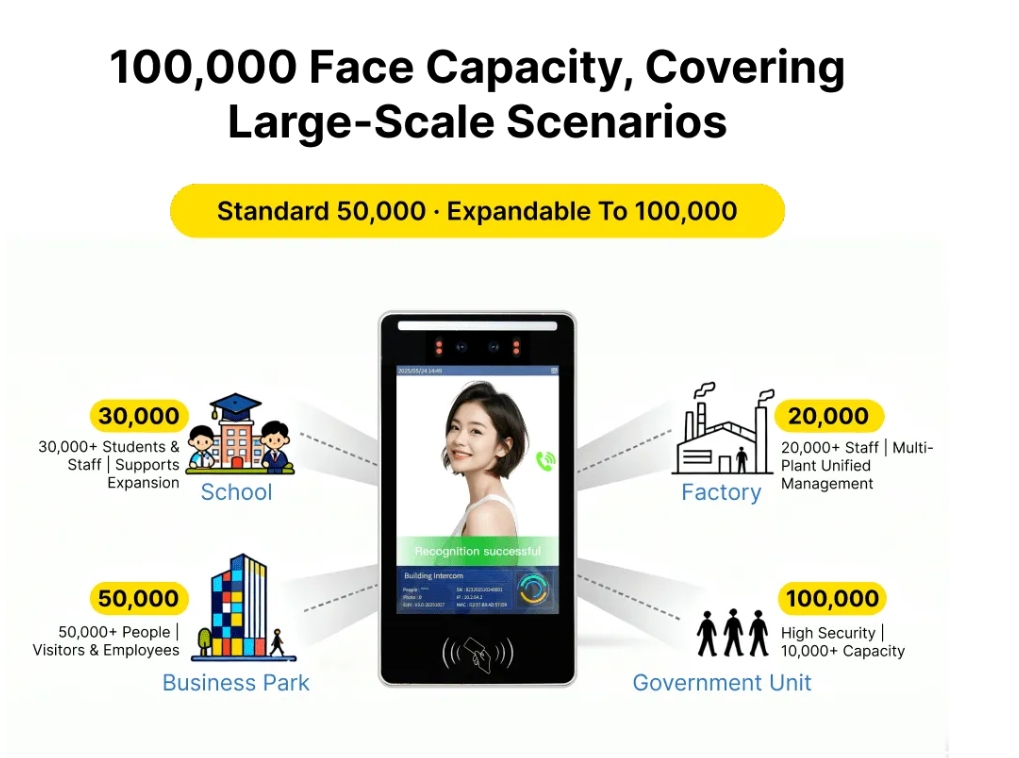
For larger entrances, the WO802 offers an IP65-rated enclosure, supports a standard 50,000-user face database capacity expandable to 100,000 users, multiple authentication methods, and SIP video communication, making it suitable for higher-capacity residential and commercial access scenarios.
For apartment and smart access projects, the WO501 Smart Life Video Intercom & 5-Inch AI Access Terminal combines SIP-based video intercom with face recognition, identity verification, liveness detection, visitor-management compatibility, and access control functions. The product family is intended for environments including communities, campuses, hospitals, hotels, shopping malls, and office buildings.
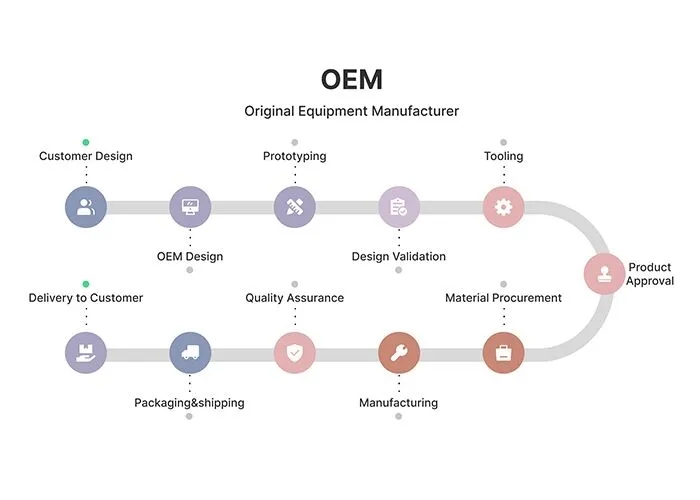
At Uniwin-Global, we also support hardware and software solutions for SIP intercom projects rather than focusing only on individual terminals. Our cooperation options include OEM/ODM, product customization, SKD cooperation, and finished-product cooperation, helping distributors, system integrators, and project developers adapt devices and system functions to different deployment requirements.
Conclusion
Traditional analog intercom systems can still provide basic entrance communication, but modern building security increasingly requires visual verification, flexible authentication, remote response, digital records, and system integration.
A well-designed SIP Video Intercom upgrade can connect these functions into a more manageable smart access control architecture. At Uniwin-Global, we combine SIP intercom hardware, IoT smart devices, system solutions, and OEM/ODM capabilities to help residential and commercial projects upgrade from basic intercom systems to integrated smart access control solutions.
Planning a SIP video intercom or smart access control project? Contact Uniwin-Global to discuss your building layout, authentication requirements, system integration, and customization needs.
FAQ
Q: Can a SIP video intercom work with face recognition access control?
A: Yes. Compatible terminals such as the WO802 combine SIP audio/video intercom with face recognition and other authentication methods, allowing communication and identity verification to operate through the same entrance terminal.
Q: Can residents answer visitors and unlock doors remotely?
A: Yes, when the system and application support the function. Uniwin-Global’s apartment intercom solution supports app-based intercom, remote door opening, and monitoring alongside indoor-station communication.
Q: Can an existing analog intercom system be retrofitted or replaced with SIP Video Intercom?
A: It depends on the existing cabling, power supply, network infrastructure, number of endpoints, and required integrations. A site assessment should be completed before deciding whether existing infrastructure can be reused or whether partial rewiring is necessary.