In the competitive landscape of modern enterprise management, the accuracy of employee records is the bedrock of operational integrity. As businesses transition from manual logs to digital solutions, the risk of “buddy punching” has evolved into sophisticated digital fraud. Low-end recognition systems are often vulnerable to simple spoofing attempts using high-resolution photographs or video playbacks on mobile devices.

The Vulnerability of Basic Recognition Terminals
The Threat of Photo and Video Spoofing
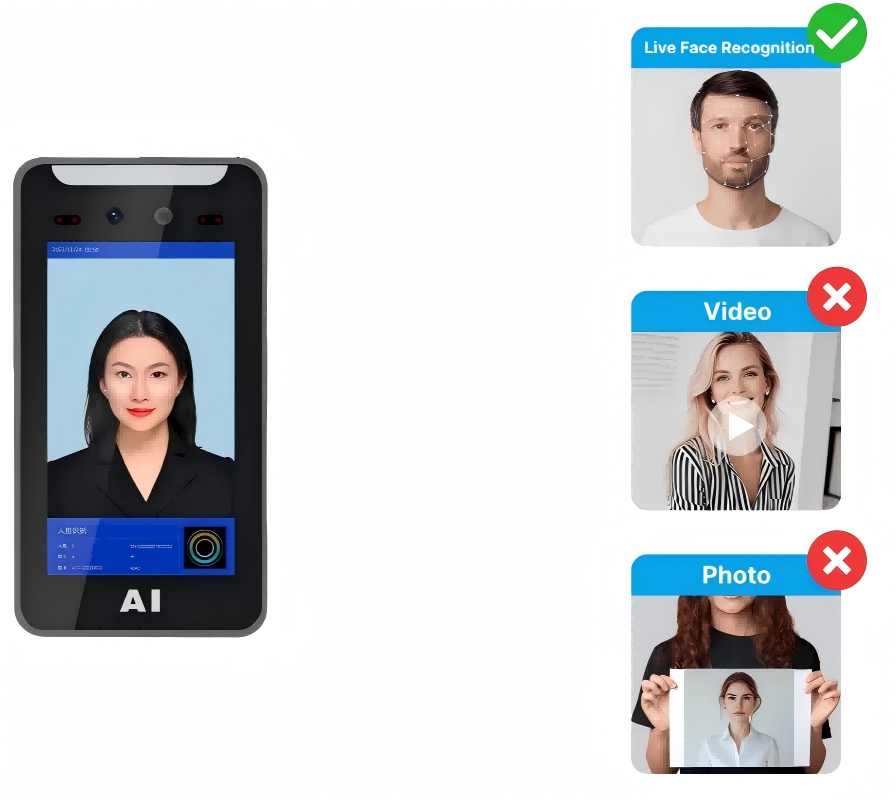
Many entry-level face recognition devices rely on 2D image analysis, which identifies features like the distance between eyes or the shape of a nose. While efficient, these systems cannot inherently distinguish between a three-dimensional human face and a two-dimensional representation. Fraudsters exploit this by presenting printed photos or digital screens to the camera. Without a mechanism to detect “liveness,” the system treats the static image as a live person, leading to significant security breaches.
Financial Consequences of Unsecured Attendance Data
For a large-scale enterprise, even a small percentage of fraudulent check-ins can lead to massive payroll inflation. When a system cannot support preventing photo spoofing, it compromises the entire 3D face recognition for the payroll ecosystem. This results in “ghost” hours and inaccurate labor cost reporting. At Uniwin-Global, we address this by providing terminals like the WR501 binocular face recognition terminal, which integrates identity verification and on-site photo capture to provide an unshakeable audit trail.
What Is Liveness Detection for Attendance Systems?
Moving Beyond Static Biometric Matching
Liveness detection is the suite of technical processes used to determine if the biometric sample being presented is from a living human being. It is the cornerstone of an anti-fraud face recognition terminal. Unlike standard recognition, which only looks for a “match” in a database, liveness detection verifies the physical presence of the user. This is critical for liveness detection for attendance systems used in unmanned or high-traffic environments where physical supervision is impossible.
How AI Differentiates Human Skin and Pixels
Modern AI terminals like WO501 are trained to recognize the subtle differences in light absorption and reflection between human skin and artificial materials like paper or LCD screens. Our systems utilize advanced algorithms to detect the “noise” or pixel patterns inherent in digital displays, which are invisible to the human eye but clear to a high-definition, wide-dynamic camera. This ensures that only a real person can trigger a successful clock-in event.
Technical Pillars of Uniwin-Global Anti-Fraud Terminals
Binocular Vision and Infrared Imaging Synergy
The most effective defense against spoofing is the use of dual-lens (binocular) technology. Our flagship products, including the WO801 8-inch binocular door machine, utilize an RGB camera combined with an Infrared (IR) camera. While the RGB lens captures color and detail, the IR lens detects thermal signatures and depth. Because a photograph or a smartphone screen does not emit the same thermal profile as human skin, our anti-fraud face recognition terminal can instantly reject the attempt.
3D Structural Mapping for Facial Depth
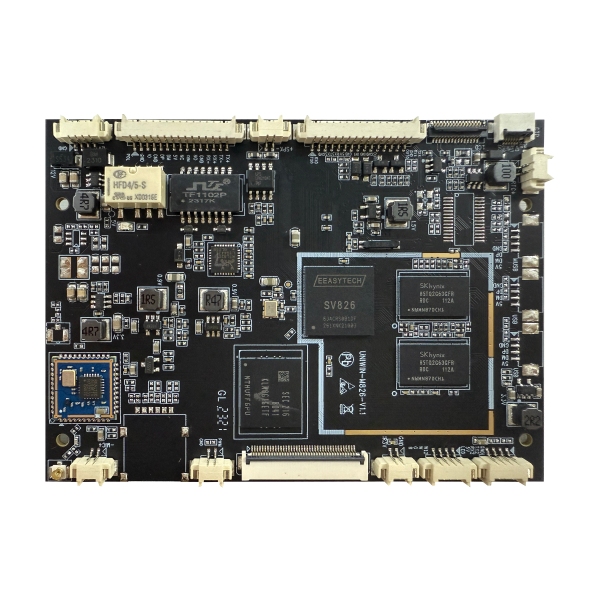
We leverage high-performance motherboards, such as the EEASYTECH SV830D, to process complex spatial data in real-time. By measuring the geometric contours of the face—such as the depth of the eye sockets and the protrusion of the chin—the system creates a volumetric map that a flat photo cannot replicate. This 3D face recognition for payroll ensures that depthless spoofs are effectively neutralized.
Screening for Artificial Light and Reflections
To further enhance security, our devices, such as the WO501 Smart Life Video Intercom & 5-Inch AI Access Terminal, are equipped with wide-dynamic high-definition cameras. These sensors are designed to detect the specific light reflection properties of electronic screens. When a digital device is held up to the terminal, the system identifies the unnatural glare and refresh rates, immediately flagging the attempt as fraudulent. This level of detail makes Uniwin-Global a leader in providing a reliable biometric time clock for demanding industrial and commercial environments.
Simulated Fraud Scenarios and Success Metrics
Thwarting High-Definition Printed Photo Attacks
In our R&D labs, we rigorously test our terminals against high-resolution matte and glossy printouts. Using our offline face recognition technology, which boasts a recognition accuracy rate exceeding 99.7%, we have demonstrated that face recognition terminals powered systems can distinguish these fakes even in varied lighting conditions. The system recognizes the lack of micro-movements and the flat surface of the paper, ensuring 100% rejection of static photo attacks.
Identifying Spoofing via Mobile Device Screens
A common advanced fraud method involves playing a video of an authorized person on a tablet. Our WO523M 5-Inch SIP Video Intercom & High-Capacity Face Recognition Terminal is specifically engineered to combat this. By analyzing the spectral characteristics of the light, the device can detect if the “face” is being emitted by a backlit screen. Our systems maintain a recognition speed of less than 300 ms, ensuring that these security checks do not slow down the flow of employees during peak hours.
Practical Guide to Selecting Reliable Biometric Hardware
Essential Hardware Specifications for Security
When selecting a system, businesses should look for “binocular” or “dual-camera” specifications. At Uniwin-Global, we offer a wide range of motherboards, such as the boards, which provide the computational power necessary for these advanced checks. A reliable biometric time clock must have the “brain” to handle both image recognition and liveness verification simultaneously without lag.
Evaluating System Performance for Large Teams
For organizations with thousands of employees, capacity and speed are just as important as security. Our WO802 8-Inch SIP Video Intercom & High-Capacity Face Recognition Terminal is designed for high-capacity environments, supporting large face databases while maintaining rigorous liveness standards.
Conclusion
The evolution of workplace fraud requires a corresponding evolution in security technology. Moving away from easily fooled 2D systems to advanced Time-and-Attendance Systems with liveness detection is no longer a luxury—it is a necessity for corporate fiscal responsibility. By choosing an anti-fraud face recognition terminal from our specialized lineup, you are investing in a future where your data is secure and your payroll is accurate.
Contact Uniwin-Global today to secure your workforce with our industry-leading liveness detection solutions and receive an accurate quote for your project.
FAQ
Q: Can face recognition be fooled by a photo?
A: Basic 2D face recognition can be fooled, but professional-grade Uniwin-Global terminals like the WR501 use binocular cameras and infrared liveness detection to identify and reject photos, videos, and even 3D masks.
Q: What is the best anti-spoofing face recognition technology?
A: The industry gold standard is binocular vision combined with infrared (IR) imaging and 3D structural analysis. Uniwin-Global integrates these into terminals like the WO101 to provide maximum security against spoofing.
Q: Why is liveness detection important for attendance?
A: It is the only way to effectively prevent “buddy punching” and identity fraud in Time-and-Attendance Systems. It ensures the person clocking in is physically present, protecting the accuracy of your payroll data.
Q: How fast is Uniwin-Global’s face recognition?
A: Our terminals and motherboards, such as the M806-V, utilize offline recognition technology that can verify a user’s identity and liveness in less than 300 ms with over 99.7% accuracy.