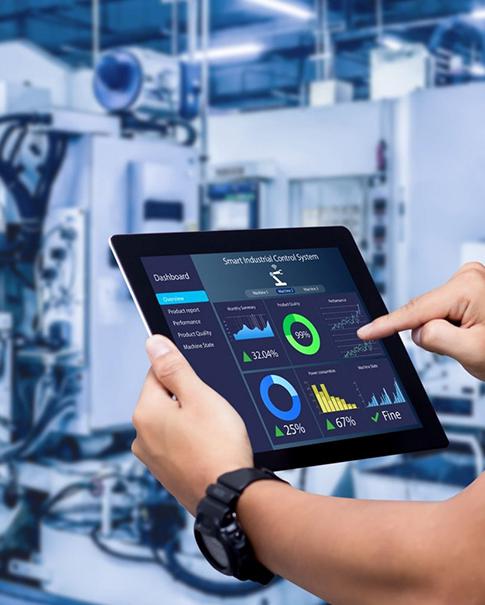
In the rapidly evolving landscape of the Internet of Things (IoT), the embedded mainboard determines the system’s recognition speed, device stability, and integration capability. For system integrators and manufacturers, the transition from traditional card-based entry to biometric authentication has made the choice of internal hardware more critical than ever. Uniwin-Global, a professional leader in designing IoT smart device solutions since 2016, understands that a face recognition terminal is only as reliable as the AI motherboard powering it. Choosing the right hardware isn’t just about finding the lowest price; it’s about balancing processing speed, recognition accuracy, and database scalability to meet specific project demands. Whether you are deploying a simple office attendance machine or a complex community SIP intercom system, this selection guide will help you navigate the technical nuances of the Uniwin-Global EEASYTECH motherboard lineup to ensure your solution is future-proof.
Beyond Price: Why Hardware Selection Matters
Avoiding Performance Bottlenecks in Recognition
When we design systems for our clients, the most common complaint regarding low-end face recognition terminals is “lag” during high-traffic hours. A motherboard with insufficient AI computing power (NPU) will struggle to process facial feature extraction in real time, leading to long queues at gates. At Uniwin-Global, we emphasize that the motherboard must handle not just the matching algorithm but also the video stream decoding and liveness detection simultaneously.
Ensuring Long-term System Scalability and Stability
System integrators often face the “capacity wall” where a client needs to add more users or features, a year after installation. Our Uniwin-Global motherboards are designed with expandability in mind. By choosing a higher-tier model like the M826, which supports dual-camera liveness detection and up to 50,000 face databases, you ensure that the system can grow with the client’s needs without requiring a full hardware replacement.
Core Metrics of an AI Motherboard
CPU Architecture and Processing Efficiency
The CPU architecture forms the foundation of the board’s multitasking capabilities. Our entry-level solutions, such as the E830-V, utilize a cost-optimized Single-Core Arm Cortex-A7 combined with a RISC-V CPU to maintain a balance between power consumption and basic processing needs.
NPU AI Computing Power and TOPS
The NPU (Neural Processing Unit) is the most critical component for face recognition. It is measured in TOPS (Trillions of Operations Per Second). We offer a tiered approach:
0.5 TOPS: Found in our E830-V model, ideal for cost-sensitive projects with smaller user bases.
1.0 TOPS: Integrated into the E823-V and E230-V, providing standard commercial-grade speed.
1.5 TOPS: The powerhouse behind our M826, capable of low-latency recognition, high-accuracy authentication even in large-scale deployments.
RAM and Storage for Smooth Operations
Database size and OS stability depend heavily on memory configuration. While entry-level boards might use 512MB DDR2, our high-performance M826 offers options up to 2GB DDR3. Storage is equally important; we provide flexible EMMC options (8GB/16GB/32GB) across our lineup, including the E823-V and M826, to ensure enough space for local record storage and firmware updates.
Analyzing NPU Performance for Face Recognition
0.5 TOPS for Entry-Level Efficiency
For small businesses or basic residential access, 0.5 TOPS is often sufficient. Our E830-V is a cost-optimized solution that supports dynamic face recognition with high-speed matching. It is designed for those who need reliable performance without the enterprise price tag, supporting multiple unlocking modes like card, face, and password.
1.0 TOPS for Standard Commercial Security
As projects scale to include SIP video intercoms and larger databases, 1.0 TOPS becomes the standard. The Uniwin-Global E823-V motherboard redefines this segment by supporting both SIP and private protocols for versatile video communication.
1.5 TOPS for High-Speed Enterprise Authentication
For barrier gate passages and large office buildings, we recommend the 1.5 TOPS power of the M826. This board is specifically engineered for AI-powered face recognition and attendance systems where accuracy exceeding 99.7% is required. Its NPU allows for advanced features like dual-camera liveness detection to prevent photo or video spoofing, a must-have for high-security environments.
Database Capacity and Project Matching
Managing Small Databases up to 2,000 Faces
The E830-V is our go-to recommendation for small to mid-sized deployments. It supports up to 2,000 faces, making it ideal for schools, small office buildings, or hotels where the user churn is low. Despite being an entry-level solution, it still offers multi-mode entry, including palmprint and fingerprint recognition.
Scaling to Mid-Range 5,000 Face Databases
When the project requirements jump to 5,000 faces, we offer the E230-V. The E230-V is highly cost-effective and supports dynamic face recognition for residential areas and villas.
High-Capacity Solutions for 50,000 Faces
For smart city projects or massive industrial parks, the M826 stands alone in our EEASYTECH lineup, supporting up to 50,000 face databases. It also features the ability to store up to 100,000 attendance records locally, allowing for offline management that remains traceable and secure.
Comparing Uniwin-Global EEASYTECH Motherboard Models
SV830D Based E830-V for Cost-Effective Terminals
The E830-V is designed for budget-friendly access control. It supports MIPI display interfaces up to 1920×1200 resolution and includes an onboard relay and Wiegand I/O for direct door control. It is the perfect starting point for manufacturers building entry-level 5-inch access control attendance machines.
SA230D Based E230-V for Mainstream Intercoms
The E230-V is a step up in flexibility. It is a highly customizable solution that supports mini-program remote door opening and multiple sets of standard docking protocols like MQTT and WebSocket.
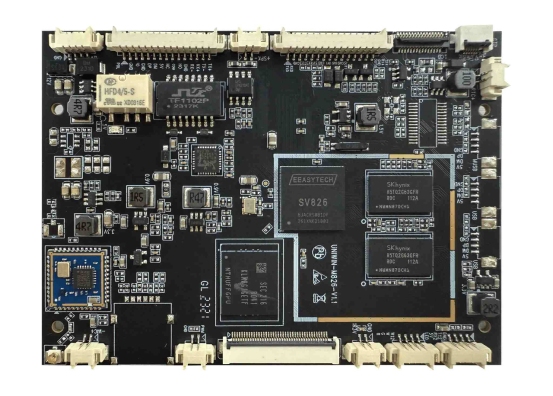
SV826 Based M826 for High-Performance Access
The M826 is our flagship AI motherboard. Beyond face recognition, it can detect mask-wearing and connect to infrared temperature modules. Its rich interface includes 3x USB ports and 3x TTL ports.
Connectivity and Integration Capabilities
SIP Protocol Support for Video Intercom
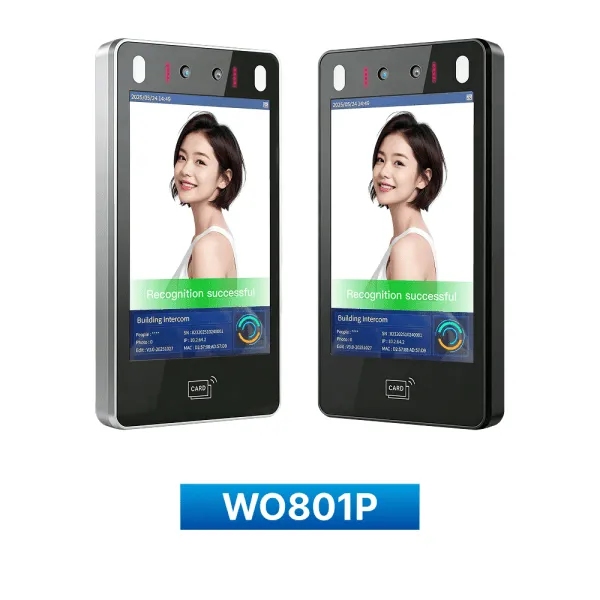
Communication is a core part of our DNA. We provide hardware and software solutions for SIP intercom products. Boards like the E823-V and E230-V support both SIP and private protocols, enabling efficient communication between outdoor stations like our WO801 and indoor monitors like the WI701.
Relay and Wiegand Interface for Door Control
For access control applications, the motherboard must support reliable electric lock control. All Uniwin-Global EEASYTECH motherboards feature integrated relays and Wiegand input/output. This allows for easy connection to exit buttons and external IC/ID card readers, which is essential for models like the M826 when matching cardholders to facial data.
Application Scenarios for EEASYTECH Solutions
Standalone Offline Attendance and Access Devices
For simple attendance tracking, our WR501 and WR701 terminals, powered by EEASYTECH boards, offer an all-in-one solution that supports offline attendance and access control when network connectivity is unavailable. The M826 is particularly strong here, using its 99.7% recognition accuracy to manage staff and visitors through a built-in web-based management interface.
Elevator Access Control and Gate Passages
The high-speed processing of the M826 makes it ideal for barrier gate passages and elevator control in high-rise office buildings. With its ability to handle 50,000 faces and provide targeted voice reminders, it ensures security remains tight without slowing down the flow of authorized personnel.
Conclusion
Selecting the best AI motherboard for face recognition is a strategic decision that impacts the security and user experience of your entire system. At Uniwin-Global, we pride ourselves on providing a spectrum of EEASYTECH solutions—from the cost-optimized E830-V for small offices to the high-performance M826 for enterprise-grade security. By focusing on the synergy between CPU architecture, NPU computing power, and database capacity, we empower system integrators to build reliable, high-speed, and secure access control terminals that are perfectly matched to their clients’ needs. With many years of R&D experience, we are committed to being your one-stop partner for industrial motherboards and intelligent system solutions, ensuring your projects remain at the forefront of biometric technology.
Ready to upgrade your security projects with the industry’s most reliable AI hardware? Contact Uniwin-Global today to find the perfect EEASYTECH motherboard for your next face recognition terminal deployment!
FAQ
Q: What is NPU in a face recognition access control system?
A: An NPU (Neural Processing Unit) is a specialized accelerator designed to handle AI algorithms. In our motherboards like the M826, the 1.5 TOPS NPU handles complex facial feature extraction and liveness detection, allowing the main CPU to focus on system operations and communication.
Q: How many faces can a Uniwin-Global AI motherboard store?
A: It depends on the model. Our entry-level E830-V supports up to 2,000 faces, while mainstream models like the E823-V support 5,000 faces. For large-scale needs, the M826 supports a database of up to 50,000 faces.
Q: Do your motherboards support customized development?
A: Yes. We provide expert OEM/ODM services with a professional R&D team covering hardware, software, and chassis design.