In the competitive landscape of smart building security, selecting the right hardware foundation is a high-stakes balancing act for procurement officers, product managers, and system integrators. Choosing an underpowered board leads to slow face recognition, system response latency, and poor resident satisfaction, while over-specifying hardware unnecessarily inflates the Bill of Materials (BOM) and reduces project ROI.
We at Uniwin-Global, a professional IoT smart device solution provider established in 2016, understand that a truly cost-effective motherboard is not necessarily the one with the lowest price tag. Instead, it is the one that perfectly aligns its technical performance with the specific demands of the application scenario. With years of experience in IoT hardware development and OEM/ODM manufacturing, we provide a comprehensive range of industrial motherboards—from entry-level boards for standalone devices to flagship processors for massive urban complexes.
Common Mistakes When Choosing an AI Access Control Motherboard
The Risks of Under-Specifying Hardware
A common pitfall in budget-conscious projects is selecting a motherboard with insufficient AI computing power. If a board’s NPU (Neural Processing Unit) is too weak, residents may face frustrating delays at the community entrance. For example, using a board intended for offline, standalone devices in a high-traffic apartment complex can result in authentication throughput decreases as the database grows. This leads to long queues and security vulnerabilities.
Avoiding Excessive Costs from Over-Engineering
Conversely, choosing the highest-end hardware for every deployment is a fast way to increase overall hardware costs. A flagship motherboard like our M826, which features a 1.5 TOPS NPU and supports up to 50,000 facial templates, is a high-performance solution for large-scale smart cities. However, for a small office with only 50 employees or a simple villa intercom, such power may be unnecessary. We recommend selecting motherboard specifications based on deployment scale, face template capacity and peripheral requirements.
Core CPU Architecture and AI Performance
Determining Necessary NPU TOPS for Face Recognition
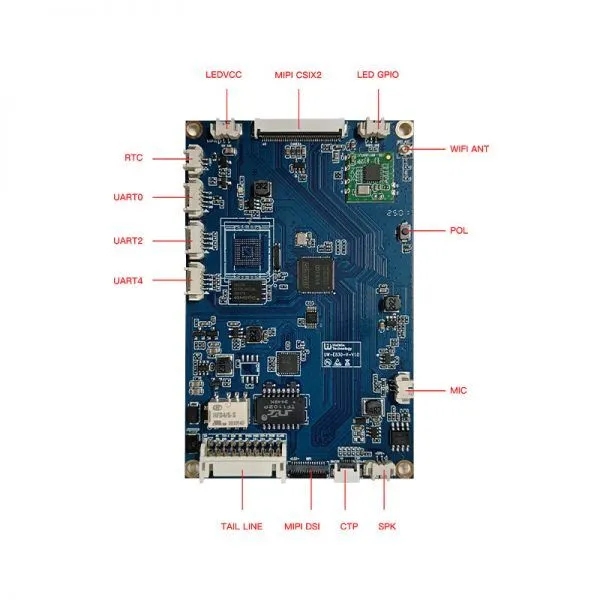
The NPU’s computing power, measured in TOPS (Tera Operations Per Second), is the most critical metric for AI face recognition. For basic entry-level access control, our E830-V motherboard (powered by the EEASYTECH SV830D) offers 0.5 TOPS, which is sufficient for fast facial authentication in smaller face template capacity. For projects requiring more complex algorithms, such as dual-camera liveness detection or mask detection, we recommend moving to the 1.0 TOPS performance of the EEASYTECH SV823 or the 1.5 TOPS of the SV826.
Matching Processing Power to User Interface Demands
Smooth navigation on a 10-inch touchscreen requires a different level of processing than a 4.3-inch status display. Our EEASYTECH series scales to meet these needs. The SV830D is one of our most widely deployed solutions for 5-inch and 7-inch displays, while the EEASYTECH SV826 dual-core ARM Cortex-A7 @1.5GHz is optimized for 7-inch, 8-inch, and 10-inch terminals like our WO101 (10-inch outdoor station). Ensuring the CPU can handle both the background AI tasks and the foreground UI is the key to a responsive user interface.
Peripheral Support and Connectivity Options for AI Access Control
Balancing RAM and Storage for Large Databases
Memory and storage directly impact how many residents a system can manage locally. Our entry-level E830-V uses a standard 1Gb SPI NAND for storage, which is cost-optimized for databases of up to 2,000 faces. In contrast, our more robust E823-V and M826 Linux motherboards offer optional EMMC storage of 8GB, 16GB, or 32GB.
Selecting 4G and WiFi for Reliable Connectivity
Connectivity is the lifeline of any smart apartment intercom. For buildings with existing wired infrastructure, our boards provide 100M Ethernet interfaces. However, for remote gates or retrofitting older buildings, wireless options are essential. We provide boards with different cellular capabilities: the EEASYTECH SA230 and SV823 support CAT 1 4G connectivity, while the flagship SV826 supports CAT 4 4G, ensuring faster data transmission for high-definition video calls.
Key Functional Features of an AI Access Control Motherboard
Integrating SIP Intercom and WeChat Mini Programs
A modern access control system must be a communication hub. All our high-performance EEASYTECH boards, including the E230-V and E823-V, support the industry-standard SIP protocol for efficient audio and video intercom. Furthermore, these boards enable remote access through WeChat Mini Program Intercom, allowing residents to receive calls and open doors from their smartphones, a feature that significantly enhances the property’s market value.
Multi-Mode Authentication from Cards to Palm Veins
To provide the highest level of convenience, a cost-effective board should support multiple entry methods. Our hardware isn’t limited to just faces; it supports IC/ID card verification, passwords, fingerprints, and even palm recognition. The E230-V motherboard, for example, is a highly customizable solution that supports these multi-mode unlocking methods, making it ideal for high-security facilities and modern smart offices.
Choosing the Right AI Motherboard for Different Application Scenarios
Entry-Level Solutions for Standalone Indoor Devices
For projects where budget is the primary driver and high-capacity networking isn’t required, we offer standalone offline solutions. The EEASYTECH SV830C is our most budget-friendly choice, focusing on basic functionality for small-scale scenarios like intelligent door cabinets. For slightly more connected needs, the E830-V (powered by SV830D) is our best-selling cost-optimized solution for entry-level access control.
High-Performance Boards for Large-Scale Community Intercoms
For developers building expansive residential complexes or “smart cities,” the M826 (powered by EEASYTECH SV826) is the premier choice. It is designed to handle outdoor strong backlight scenarios through its Dual 200W MIPI camera interface, ensuring that the sun never “blinds” the security system.
The Uniwin-Global Advantage: OEM and ODM Customization
Vertical Integration of Hardware and Software Solutions
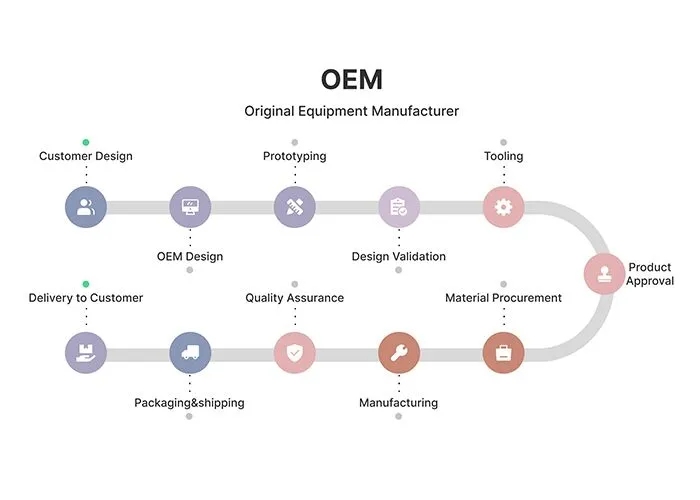
One of our core advantages is that we are both a motherboard designer and a terminal manufacturer. This vertical integration allows us to provide a seamless “one-stop” experience where the hardware and software are optimized for each other. Whether you need a standard embedded motherboard or a complete custom terminal with your branding, our R&D departments for hardware, software, and chassis design are at your service.
Accelerated Development Cycles for Professional Projects
We understand that time-to-market is critical. Uniwin-Global offers a streamlined OEM/ODM process: customized board card products can typically be delivered within 45 work days, while complete machine customization takes approximately 60 work days. This efficiency, combined with our technical capability to provide open interfaces for secondary development, allows our partners to deploy professional security solutions faster than the competition.
Conclusion
Choosing the best AI access control motherboard is about identifying the specific needs of your project—whether it’s the 50,000-face capacity of the flagship M826 or the cost-optimized efficiency of the E830-V. By partnering with Uniwin-Global, you gain access to over a decade of engineering expertise and a diverse product line designed to solve the real-world challenges of smart building security. From mastering strong backlight face recognition to enabling seamless SIP intercom communication, our hardware serves as the reliable “brain” for the modern smart access control applications.
Ready to optimize your hardware costs for your next AI project? Contact Uniwin-Global today for a professional hardware evaluation and expert OEM/ODM consulting.
FAQ
Q: What is the best motherboard for an AI access control system?
A: The “best” board depends on your database size and environment. For large-scale residential communities requiring high accuracy and outdoor durability, the Uniwin-Global M826 (powered by EEASYTECH SV826) is ideal. For smaller, indoor, cost-sensitive projects, the E830-V provides excellent performance for up to 2,000 faces.
Q: How many TOPS are needed for face recognition?
A: For basic identification in small groups, 0.5 TOPS is sufficient. However, for faster recognition, dual-camera liveness detection, and handling large databases of up to 20,000 or 50,000 users, we recommend motherboards with 1.0 to 1.5 TOPS, such as those using the EEASYTECH SV823 or SV826 chips.
Q: Can a cost-effective AI motherboard support SIP intercom?
A: Yes. Most of our EEASYTECH-based motherboards, starting from the SV830D series (e.g., E830-V), fully support the SIP protocol for audio and video intercom. This allows them to function as both a secure access terminal and a communication device for apartment and villa systems.